Which item is an input to the Define Activities process?
Schedule data
Activity list
Risk register
Scope baseline
The Answer Is:
DExplanation:
According to the PMBOK® Guide, specifically within the Project Schedule Management knowledge area, the Define Activities process is the process of identifying and documenting the specific actions to be performed to produce the project deliverables.
Scope Baseline: This is a primary input to the Define Activities process. The scope baseline consists of the Project Scope Statement, the Work Breakdown Structure (WBS), and the WBS Dictionary. Since the goal of Define Activities is to break down work packages into specific activities, the project manager must start with the WBS (found within the scope baseline) to ensure all required work is accounted for.
The Breakdown Process: In the hierarchy of project planning, you first define the scope, then decompose that scope into work packages (Create WBS), and finally decompose those work packages into activities (Define Activities). Therefore, the baseline containing those work packages is a mandatory starting point.
Why the other options are incorrect:
A. Schedule data: This is an output of the Develop Schedule process. It includes items such as schedule milestones, activity attributes, and documentation of assumptions and constraints. It is created much later in the planning sequence.
B. Activity list: This is the primary output of the Define Activities process itself. It is the comprehensive list of all schedule activities required to be performed on the project.
C. Risk register: While risks can influence activity durations or resource requirements, the Risk Register is not a standard formal input for the initial identification of activities in the Define Activities process. It becomes more relevant during Estimate Activity Durations and Develop Schedule.
What is an output of the plan resource management process
Project charter
Risk register
Scope baseline
Stakeholder register
The Answer Is:
DExplanation:
According to the PMBOK® Guide, the Plan Resource Management process involves defining how to estimate, acquire, manage, and use team and physical resources. While the primary output is the Resource Management Plan, this process often results in Project Documents Updates.
Stakeholder Register Updates: During Plan Resource Management, the project manager identifies the roles and responsibilities required for the project. In doing so, they may identify new stakeholders or realize that the requirements/expectations of existing stakeholders have changed based on the resource strategy. Therefore, the Stakeholder Register is frequently updated as an output of this process.
Other Outputs:
Resource Management Plan: The primary document describing how resources are categorized, allocated, and managed.
Team Charter: A document that establishes the team values, agreements, and operating guidelines.
Project Documents Updates: Including the Assumption Log and Risk Register.
Analysis of other options:
A. Project charter: This is an output of the Develop Project Charter process (Initiating Phase) and actually serves as an input to Plan Resource Management.
B. Risk register: The Risk Register is an output of Identify Risks. While it may be updated during resource planning, the Stakeholder Register is a more direct document update associated with identifying the people needed for the project.
C. Scope baseline: This is an output of the Create WBS process within the Project Scope Management knowledge area.
Per PMI standards, Plan Resource Management ensures that the project team is structured correctly, and updating the Stakeholder Register is a necessary step to reflect the people involved in or impacted by that resource structure.
Change request status updates are an output of which process?
Perform Integrated Change Control
Direct and Manage Project Execution
Close Project or Phase
Monitor and Control Project Work
The Answer Is:
AExplanation:
According to the PMBOK® Guide, the process of Perform Integrated Change Control is the central point where all change requests are reviewed, approved, or rejected.
Process Definition: This process is conducted from the project ' s inception through to completion. It is the only process responsible for managing changes to deliverables, project documents, and the project management plan.
The Output: When a change request is submitted (typically as an output from various Monitoring and Controlling processes), it is processed here. The Change Request Status Updates are the formal output indicating whether the request was:
Approved: The change is authorized and will be implemented.
Deferred: The change is postponed for a later phase or version.
Rejected: The change is denied.
Communication: These status updates are then communicated to the stakeholders and used to update the Change Log, which tracks the progress and final disposition of all changes throughout the project life cycle.
Comparison with Other Options:
Direct and Manage Project Execution (B): This process (now called Direct and Manage Project Work) is where approved changes are actually implemented. It provides " Change Requests " as an output when the team identifies a need for a change, but it does not update the " status " of the request itself.
Close Project or Phase (C): This process involves finalizing all activities across all Process Groups to formally complete the project or phase. While it ensures all changes are closed out, it is not the process that generates status updates for active requests.
Monitor and Control Project Work (D): This process is focused on tracking, reviewing, and reporting the overall progress to meet the performance objectives defined in the project management plan. It generates " Change Requests " as an output when variances are detected, but the decision and status update happen in Integrated Change Control.
A project manager has been assigned to a project with a short duration and given funding to form a small team. The project manager needs to choose team members based on their availability and other aspects.
What other features should the project manager consider?
Skill set, expertise, and training readiness
Past project performance, wage rate, and network base
Collaborative skills, quality focus, and political connections
Priorities, resource demand, and expertise
The Answer Is:
AExplanation:
When a project manager is tasked with forming a team—especially for a short-duration project—the efficiency and immediate capability of the resources are paramount. In the PMBOK® Guide, this falls under the Resource Management knowledge area, specifically the Acquire Resources process.
Why Choice A is correct:
Skill set and Expertise: For a short project, there is little time for a learning curve. The project manager must ensure team members possess the specific technical skills and prior experience (expertise) to hit the ground running.
Training Readiness: This refers to the ability of the resource to bridge small gaps quickly or adapt to the project ' s specific tools and methodologies.
Multi-Criteria Decision Analysis (MCDA): This is a formal tool used during resource acquisition where the PM evaluates potential members against criteria such as availability, cost, experience, ability, and knowledge. Choice A aligns most closely with the professional attributes required to ensure project success under time constraints.
Analysis of other options:
B (Past performance, wage rate, network base): While past performance and cost (wage rate) are factors, " network base " (who the person knows) is rarely a primary selection criterion for a small, short-duration technical team compared to their actual ability to do the work.
C (Collaborative skills, quality focus, political connections): Collaboration and quality are important, but " political connections " are generally considered an inappropriate or secondary factor for selecting a project team, as it focuses on influence rather than competence.
D (Priorities, resource demand, and expertise): " Priorities " and " resource demand " are organizational factors (often managed by a Resource Manager or PMO) rather than individual " features " or attributes of a specific person being considered for a team.
Key Concept: The Project Management Institute (PMI) emphasizes that for high-performing teams, the Project Manager must look beyond mere " availability. " By focusing on Skill set, expertise, and training readiness (Choice A), the Project Manager mitigates the risk of delays, ensuring the small team has the collective " horsepower " to complete the deliverables within the restricted timeline.
Which is the tool or technique that is used to obtain the list of activities from the work packages?
Data analysis
Leads and lags
Precedence diagramming method
Decomposition
The Answer Is:
DExplanation:
According to the PMBOK® Guide (6th Edition), specifically within the Define Activities process (Project Schedule Management), Decomposition is the primary tool and technique used to divide and subdivide the project scope and project deliverables into smaller, more manageable parts called activities.
While decomposition is also used in the Create WBS process to break down the project into work packages, in the Define Activities process, it goes one step further. It takes those work packages (the lowest level of the WBS) and breaks them down into the specific actions required to produce the deliverable.
Key Characteristics of Decomposition in this context:
Granularity: It transforms " deliverables " (nouns) into " activities " (verbs).
Result: The final output of this technique in this process is the Activity List, which provides a basis for estimating, scheduling, executing, monitoring, and controlling the project work.
Involvement: The project team members who will perform the work usually participate in this decomposition to ensure accuracy.
Analysis of Distractors:
A (Data analysis): This is a broad category of techniques (like alternative analysis) used to evaluate different ways to meet requirements, but it is not the specific mechanical process of breaking down work packages into activities.
B (Leads and lags): These are used during the Develop Schedule process to adjust the timing of activities that have already been identified and sequenced.
C (Precedence diagramming method): This is a technique used in the Sequence Activities process to create a logical schedule network diagram. It determines the relationship between activities, but it is not used to generate the activities from work packages.
Which of the following events would result in a baseline update?
A project is behind schedule and the project manager wants the baseline to reflect estimated actual completion.
A customer has approved a change request broadening the project scope and increasing the budget.
One of the risks identified in the risk management plan occurs, resulting in a schedule delay.
One of the key project team resources has left the team and no replacement is available.
The Answer Is:
BExplanation:
According to the PMBOK® Guide, a Baseline (Scope, Schedule, or Cost) is the approved version of a project plan. It can only be changed through formal Change Control procedures and is used as a basis for comparison to actual results.
Approved Change Requests: When a change request is formally approved through the Perform Integrated Change Control process, and that change affects the project ' s scope, schedule, or cost, the corresponding baselines must be updated. This ensures that the " yardstick " used to measure performance reflects the new, agreed-upon reality of the project.
The Baseline ' s Purpose: The baseline exists to track variances. If you changed the baseline every time a project was late or a risk occurred (Options A, C, and D), you would lose the ability to measure how far the project has drifted from the original plan.
Analysis of Other Options:
A. A project is behind schedule...: This is often referred to as " re-baselining to hide delays. " Baselines should not be updated simply because performance is poor; the baseline must remain to show the extent of the delay.
C. A risk occurs, resulting in a delay: When a risk occurs, it is handled using contingency reserves or workarounds. While it impacts the actual data, it does not automatically change the baseline unless a formal change request is approved to modify the project ' s end date.
D. Resource leaves with no replacement: This is a project constraint or issue. While it will likely cause a variance in the schedule and cost, the baseline remains the same so the project manager can report the negative impact of that resource loss against the original plan.
Select two key benefits of the Control Procurements process
Enables the development of make-or-buy decisions
Ensures that contract performance meets the terms of the legal agreement
Guarantees that legal agreements influence vendor selection
Assures that legal agreements guide contract closings
Helps determine whether a certain type of contract should be used
The Answer Is:
B, DExplanation:
According to the PMBOK® Guide, the Control Procurements process is the process of managing procurement relationships, monitoring contract performance, making changes and corrections as appropriate, and closing out contracts.
The two key benefits identified in the PMI standards are:
B. Ensures that contract performance meets the terms of the legal agreement: This process involves both the buyer and seller. It ensures that the seller’s performance meets the project ' s requirements and that the buyer performs according to the terms of the legal contract (such as making timely payments). It involves reviewing and documenting how a seller is performing to ensure the desired results are achieved.
D. Assures that legal agreements guide contract closings: Control Procurements includes the administrative activities involved in finalizing a contract. It ensures that all deliverables have been accepted, all payments have been made, and all contractual obligations have been fulfilled before the contract is formally closed.
Analysis of other options:
A and E (Make-or-buy decisions and contract type selection): These are key benefits and activities of the Plan Procurement Management process. These decisions must be made during the planning phase, well before a contract is active.
C (Vendor selection): This is the primary focus of the Conduct Procurements process, which involves receiving seller responses, selecting a seller, and awarding a contract.
Per the PMI standards, Control Procurements is unique because it has a significant legal component, requiring the project team to be aware of the legal implications of the actions taken when managing the relationship with the seller.
A project was sent for early customer testing and the customer reported that some of the features do not features do not meet the requirements. What should the project manager have done to avoid this scenario?
Engage customer earlier
Conduct quality audits
Validate Scope
Validate quality requirements
The Answer Is:
BExplanation:
According to the PMBOK® Guide, the scenario describes a situation where deliverables reached the customer but failed to meet the specified requirements. This indicates a breakdown in the Manage Quality and Control Quality processes. To avoid this, the project manager should have conducted Quality Audits.
The Role of Quality Audits: A quality audit is a structured, independent process used to determine if project activities comply with organizational and project policies, processes, and procedures. It is a key tool in the Manage Quality process.
Prevention of Non-conformance: Audits help identify inefficient or ineffective policies being used on the project. By conducting these audits early and often, the project manager can ensure that the " process " of building the features is correct, which results in a product that actually meets the requirements.
Closing the Gap: Audits confirm the implementation of approved change requests and ensure that the team is following the Quality Management Plan. If the team was deviating from requirements, a quality audit would have flagged this internal inconsistency before the product ever reached the customer for testing.
Why other options are incorrect:
Option A: Engage customer earlier: While stakeholder engagement is important, the prompt specifies that the features did not meet requirements. This is a technical quality issue, not necessarily a communication issue. If the requirements were already documented, the team failed to build to those standards.
Option C: Validate Scope: This is the process of formalizing acceptance of the completed project deliverables by the customer. Validate Scope is where the customer found the problem. You cannot " Validate Scope " to avoid the problem; validation is the point where the failure is officially recognized.
Option D: Validate quality requirements: This is not a standard PMI process name. While you " Plan Quality Management " to define requirements, " validating " them usually refers to the internal verification of the deliverables themselves (Control Quality), which is governed by the processes checked during a Quality Audit.
Which statement about identification and engagement of stakeholders during a project is correct?
Project stakeholders should be Identified and engaged in every phase of the project to influence the success of the project directly.
Project stakeholders should be identified and engaged once the prototype is completed to provide their feedback but refrain from making inputs during the project.
Project stakeholders should be identified when the project chatter is being completed and engaged during requirements gathering.
Project stakeholders should be identified and engaged during requirements elicitation but not during the Define Scope process.
The Answer Is:
AExplanation:
According to the PMBOK® Guide, stakeholder engagement is not a one-time event or a task limited to the beginning of the project. It is a continuous and iterative process that must occur throughout the entire project life cycle.
Continuous Identification: New stakeholders can emerge at any time—during a change in project direction, a transition between phases, or shifts in the organizational landscape. Therefore, the Identify Stakeholders process should be revisited at the start of every phase and whenever a significant change occurs.
Direct Influence on Success: Stakeholders hold the power to support or resist project objectives. Their early and ongoing engagement helps the project manager manage expectations, resolve conflicts, and ensure the deliverables meet the actual business need.
Engagement Levels: The degree and nature of engagement may shift (e.g., a stakeholder may be heavily involved in requirements gathering but only receive status reports during execution), but they remain " engaged " throughout to ensure their continued alignment with project goals.
Iterative Nature: The Stakeholder Engagement Plan is a living document. As the project progresses, the project manager must monitor these relationships and adjust strategies to keep stakeholders supportive.
Analysis of Other Options:
B. Project stakeholders should be identified and engaged once the prototype is completed...: This is far too late. Waiting until a prototype is built to engage stakeholders often leads to costly rework if their requirements or expectations were not captured early.
C. Project stakeholders should be identified when the project charter is being completed and engaged during requirements gathering: While identification starts during the charter and engagement is heavy during requirements, this statement implies that engagement stops there. Stakeholders must remain engaged through execution and closing to ensure final acceptance.
D. Project stakeholders should be identified and engaged during requirements elicitation but not during the Define Scope process: This is contradictory. The Define Scope process relies heavily on stakeholder input to determine what is in and out of the project. Excluding them from this process would likely result in scope gaps or misalignment.
What is one reason why stakeholders must be identified when performing business analysis?
To identify project timelines through business reviews
To allow the business analyst to determine the project budget
To identify who should define the business requirements for the project
To determine a cost-benefit analysis for the project
The Answer Is:
CExplanation:
According to the PMI Guide to Business Analysis and the PMBOK® Guide, identifying stakeholders is one of the most critical initial steps in any project or business analysis effort.
Defining the " Who " : Requirements do not exist in a vacuum; they belong to people, groups, or organizations. By identifying stakeholders early, the business analyst determines exactly whose needs, expectations, and constraints must be captured to define the project ' s scope.
Requirements Ownership: Different stakeholders provide different types of requirements. For example, a department head might define high-level Business Requirements, while an end-user defines User Requirements. Without identifying these individuals, the business analyst would not know whom to interview, observe, or invite to workshops, leading to critical gaps in the final solution.
Stakeholder Influence: Identifying stakeholders also allows the business analyst to understand their level of influence and impact. This ensures that the requirements defined are not only comprehensive but also prioritized based on the stakeholders ' roles and their ability to affect the project ' s success.
Analysis of other options:
Option A: Identifying project timelines is a function of the Develop Schedule process. While stakeholders provide input on constraints, the primary reason for identifying them in a business analysis context is related to requirements, not schedule creation.
Option B: Determining the project budget is the responsibility of the Project Manager and the Sponsor during the Determine Budget process. A business analyst uses the budget as a constraint but does not identify stakeholders specifically to set the project ' s total funding.
Option D: A Cost-benefit analysis is typically part of the Business Case, which is often created before or alongside stakeholder identification. While stakeholders provide the data for the analysis, the fundamental reason for identifying them is to extract the requirements that the project must fulfill.
Per PMI standards, the core purpose of stakeholder identification in business analysis is to ensure that all relevant voices are heard so that the Business Requirements accurately reflect the problem to be solved or the opportunity to be seized.
The project manager is working in the processes of Project Resource Management. Which process is the project manager developing if they are using parametric estimation?
Plan Resource Management
Estimate Activity Resources Communications
Estimate Costs
Acquire Resources
The Answer Is:
BExplanation:
According to the PMBOK® Guide (6th Edition), the Estimate Activity Resources process is the process of estimating the team resources and the type and quantities of materials, equipment, and supplies necessary to perform project work.
Parametric Estimation is a specific Tool and Technique used in this process. It involves using an algorithm or a statistical relationship between historical data and other variables (e.g., square footage in construction, lines of code in software development) to calculate resource quantities.
Why Parametric Estimation is used here:
Scalability: If you know it takes one technician 2 hours to install one workstation, you can use that parameter to estimate the resources needed for 100 workstations.
Accuracy: When based on high-quality historical data, it provides a more accurate resource requirement than simple analogies.
Analysis of Distractors:
A (Plan Resource Management): This process is focused on establishing the approach and physical resource management strategies (the " how-to " document). It uses expert judgment and meetings rather than mathematical resource modeling like parametric estimation.
C (Estimate Costs): While Estimate Costs does use parametric estimation, the question specifically asks which process the project manager is developing within Project Resource Management. Estimate Costs belongs to the Project Cost Management knowledge area.
D (Acquire Resources): This is an executing process focused on obtaining the team members, facilities, equipment, and materials. The estimation should have been completed prior to this stage; here, the project manager uses negotiation, pre-assignment, and virtual team tools.
Reserve analysis is a tool and technique used in which process?
Plan Risk Management
Plan Risk Responses
Identify Risks
Control Risks
The Answer Is:
DExplanation:
According to the PMBOK® Guide (Project Risk Management), Reserve Analysis is a specific Data Analysis tool and technique used during the process of monitoring and controlling risks.
The purpose of Reserve Analysis in this context is to compare the amount of contingency reserves remaining to the amount of risk remaining at any given time in the project. This ensures that the reserve is adequate to cover the outstanding risks.
Contingency Reserves: These are funds or time set aside to address " known-unknowns " (identified risks).
Management Reserves: These are for " unknown-unknowns " and are generally not part of the cost baseline but are part of the total project budget.
Throughout the project, as risks occur, some contingency reserves are used. Conversely, if risks do not occur or are closed out, the associated reserves may be released. Reserve Analysis helps the project manager determine if the remaining budget is sufficient for the remaining risk profile.
Analysis of Distractors:
A. Plan Risk Management: This process focuses on defining the methodology for risk activities. It does not involve calculating or analyzing specific reserves.
B. Plan Risk Responses: While this process involves determining the amount of contingency reserve needed for specific response strategies, the " Analysis " of those reserves against actual project performance occurs during the monitoring/control phase.
C. Identify Risks: This process is dedicated to discovering which risks might affect the project and documenting their characteristics. It precedes the allocation and analysis of reserves.
Market conditions and published commercial information are examples of which input to the Estimate Costs process?
Scope baseline
Organizational process assets
Enterprise environmental factors
Risk register
The Answer Is:
CExplanation:
According to the PMBOK® Guide and the Standard for Project Management, Market conditions and published commercial information (such as commercial databases or price lists) are classic examples of Enterprise Environmental Factors (EEF).
In the Estimate Costs process, EEFs are internal or external factors that are not under the direct control of the project team but influence, constrain, or direct the project. Specifically:
Market conditions: These describe what products, services, and results are available in the local and global marketplace, which directly affects the cost of resources.
Published commercial information: This includes resource cost rate information that is often available from commercial databases that track skills and human resource costs, and provide standard costs for material and equipment.
The other options are incorrect based on the following PMI definitions:
Scope baseline: This includes the project scope statement, WBS, and WBS dictionary. While it provides the requirements and work packages that need to be estimated, it does not contain external market pricing or commercial data.
Organizational Process Assets (OPA): These are internal to the organization and include things like cost estimating templates, historical information, and lessons learned from previous projects. " Published commercial information " is considered external, thus making it an EEF.
Risk Register: This is an input used to consider the " cost of risk " (contingency reserves). While it influences the total estimate, it is not the source for general market conditions or commercial price lists.
As per the PMI Lexicon of Project Management Terms, Enterprise Environmental Factors provide the context in which the project operates, and in the case of cost estimation, they provide the external economic reality that the project manager must account for.
Which of the following is an example of the simplest fixed-price contract?
Purchase requisition
Purchase order
Verbal agreement
Request for quote
The Answer Is:
BExplanation:
According to the PMBOK® Guide and the Practice Standard for Project Procurement Management, a Purchase Order (PO) is the simplest and most common form of a fixed-price contract.
Definition: A Purchase Order is a unilateral document issued by a buyer to a seller, indicating types, quantities, and agreed prices for products or services. It becomes a binding bilateral contract once the seller accepts it or fulfills the order.
Fixed-Price Characteristics: Because the price is set at the time the order is placed and does not change regardless of the seller ' s cost to produce the item, it falls under the Fixed-Price (FP) or Lump-Sum category.
Usage: It is typically used for " off-the-shelf " items, commodities, or standard services where the scope is clearly defined and the risk to the buyer is minimal.
Comparison with Other Options:
Purchase Requisition (A): This is an internal document used within an organization to notify the procurement department that an item is needed. It is not a contract and does not involve the seller.
Verbal Agreement (C): While potentially legally binding in some jurisdictions, it is not a " standard " or " simple " contract type recognized for professional project procurement due to the lack of documentation and high risk of dispute.
Request for Quote (D): This is a Procurement Document used to solicit proposals or bids from prospective sellers. It is a request for information, not a contract itself.
The project manager is dividing the project scope into smaller pieces, and repeating this process until no more subdivisions are required. At this point the project manager is able to estimate costs and activities for each element.
What are these elements called?
Project activities
Work packages
Planning packages
Project deliverables
The Answer Is:
BExplanation:
According to the PMBOK® Guide, the process described is Decomposition, which is the primary technique used in the Create WBS (Work Breakdown Structure) process.
Definition of a Work Package: A work package is the lowest level of the Work Breakdown Structure. It is the point at which the cost and duration for the work can be reliably estimated and managed.
The Goal of Decomposition: The project manager subdivides project deliverables into smaller, more manageable components. This process continues until the work is defined at a level of detail that allows for:
Cost Estimation: Assigning a specific budget to the work.
Activity Definition: Breaking the work package further into schedule activities.
Monitoring and Control: Tracking progress against a specific baseline.
The 8/80 Rule: A common heuristic in project management is that a work package should be between 8 and 80 hours of effort. If it is larger, it may need further decomposition; if it is smaller, it might be too granular for the WBS level.
Analysis of Other Options:
A. Project activities: These are even smaller than work packages. Activities are the specific actions required to produce a work package. They are defined during the Define Activities process (part of Schedule Management), not during the creation of the WBS (Scope Management).
C. Planning packages: These are components of the WBS that are below the control account but above the work package level. They have known work content but lack detailed schedule activities. They are used for " Rolling Wave Planning " when details for a specific part of the project are not yet available.
D. Project deliverables: While work packages are deliverables, " deliverables " is a broad term that applies to any unique and verifiable product, result, or capability. The specific " elements " at the lowest level of the WBS resulting from decomposition are strictly defined as work packages.
A project team is working on relocating offices to another building and providing new furniture. The new furniture was purchased from an international vendor. The price was negotiated in a foreign currency, and due to changes in the exchange rate, the cost has increased by 10%. There is no contingency in the project budget. What should the project manager do?
Escalate this issue to the project management office (PMO).
Escalate this issue to the chief financial officer (CFO).
Escalate this issue to the procurement team.
Escalate this issue to the project sponsor.
The Answer Is:
DExplanation:
According to the PMBOK® Guide, specifically regarding the Monitor and Control Project Work and Determine Budget processes, a project manager ' s authority is limited by the approved cost baseline and management reserves.
Exceeding the Budget: When a project experiences a cost increase (such as a 10% currency exchange fluctuation) and there is no contingency reserve left to cover it, the project manager has exceeded their spending authority.
Role of the Project Sponsor: The sponsor is the individual or group that provides the financial resources for the project. They are ultimately responsible for the project ' s business case and success. Because this issue impacts the project ' s financial viability and requires additional funding beyond the baseline, the project manager must escalate the situation to the Project Sponsor.
Risk vs. Issue: While exchange rate fluctuation is a known risk in international procurement, once it has occurred and there is no budget to address it, it becomes an Issue. The sponsor must decide whether to provide additional funds (from management reserves), reduce the project scope, or accept a lower quality of furniture to stay within the original budget.
Management Reserves: These are amounts of the project budget withheld for management control purposes (the " unknown-unknowns " ). Accessing these funds typically requires formal approval from the sponsor or a steering committee.
Analysis of other options:
Option A: The PMO provides support, governance, and templates. While they may offer advice on how to handle the documentation, they generally do not provide the additional funding needed to solve a project ' s budget deficit.
Option B: Escalating directly to the CFO skips the project ' s established governance structure. The project manager should follow the chain of command, which starts with the project sponsor.
Option C: The procurement team handles the contract and vendor relationship. While they can confirm the price increase and the exchange rate logic, they do not have the authority to grant additional budget to the project.
Per PMI standards, any significant variance that threatens the project ' s baseline and cannot be resolved using the project manager ' s allotted contingency must be escalated to the Project Sponsor for a strategic decision on how to proceed.
Which enterprise environmental factors may influence Plan Schedule Management?
Cultural views regarding time schedules and professional and ethical behaviors
Historical information and change control procedures
Risk control procedures and the probability and impact matrix
Resource availability and organizational culture and structure
The Answer Is:
DExplanation:
According to the PMBOK® Guide, specifically the Plan Schedule Management process, Enterprise Environmental Factors (EEFs) refer to conditions, not under the control of the project team, that influence, constrain, or direct the project.
Impact on Schedule Planning: When developing the Schedule Management Plan, the project manager must consider the environment in which the project operates. Key EEFs include:
Organizational culture and structure: This affects how schedules are developed and managed (e.g., a highly bureaucratic culture may require more formal approval levels).
Resource availability: The availability of physical and human resources directly dictates how a schedule can be constructed and whether certain activities can run in parallel.
Project management software: The specific tools provided by the organization for scheduling.
Commercial databases: Resource leveling or standardized duration estimates from industry databases.
Comparison with other options:
A. Cultural views... and ethical behaviors: While " culture " is an EEF, the specific phrasing regarding " professional and ethical behaviors " is more aligned with the Code of Ethics and Professional Conduct rather than the primary environmental inputs listed in the PMBOK® Guide for Schedule Management.
B. Historical information and change control procedures: These are classified as Organizational Process Assets (OPAs), not EEFs. OPAs are internal to the organization (like templates and past project files), whereas EEFs are the environment/conditions surrounding the project.
C. Risk control procedures and the probability and impact matrix: These are also Organizational Process Assets (OPAs) typically found in the Risk Management Plan or the organization ' s process library, used to guide how risk is handled rather than the environmental factors influencing the schedule ' s creation.
Which of the following can be used as an input for Define Scope?
Product analysis
Project charter
Scope baseline
Project scope statement
The Answer Is:
BExplanation:
According to the PMBOK® Guide, the Define Scope process is the process of developing a detailed description of the project and product. Since this process occurs early in the Planning Process Group, it relies on high-level guidance to establish boundaries.
The Project Charter as an Input: The Project Charter is a key input because it provides the high-level project description, product characteristics, and approval requirements. It contains the " boundaries " set during the initiation phase that the project manager must now elaborate into a detailed scope.
Other Key Inputs:
Project Management Plan (specifically the Scope Management Plan).
Project Documents (such as the Requirements Documentation and Risk Register).
Enterprise Environmental Factors (EEF).
Organizational Process Assets (OPA).
The Goal: The goal of using these inputs in " Define Scope " is to transition from a high-level vision (the Charter) to a specific, detailed set of deliverables and work.
Analysis of Other Options:
A. Product analysis: This is a Tool and Technique used during the Define Scope process (used to translate high-level product descriptions into tangible deliverables), not an input.
C. Scope baseline: This is an Output of the Create WBS process. It consists of the approved scope statement, WBS, and WBS dictionary. It cannot be an input to Define Scope because Define Scope must happen first to create the scope statement.
D. Project scope statement: This is the primary Output of the Define Scope process. It documents the entire scope, including project and product scope, deliverables, and exclusions.
Which output of Project Cost Management consists of quantitative assessments of the probable costs required to complete project work?
Activity cost estimates
Earned value management
Cost management plan
Cost baseline
The Answer Is:
AExplanation:
According to the PMBOK® Guide (Project Management Body of Knowledge), specifically within the Project Cost Management knowledge area and the Estimate Costs process:
Activity Cost Estimates (Option A): This is the primary output of the Estimate Costs process. They are defined as quantitative assessments of the probable costs required to complete project work. These estimates can be presented in summary form or in detail and include all resources that will be charged to the project (e.g., direct labor, materials, equipment, services, facilities, and special categories such as inflation allowance or contingency costs).
Earned Value Management (Option B): This is a methodology or a tool and technique used in the Control Costs process. It integrates scope, schedule, and resources to measure project performance and progress. It is not an output consisting of initial cost assessments.
Cost Management Plan (Option C): This is an output of the Plan Cost Management process. It is a component of the project management plan that describes how the project costs will be planned, structured, and controlled. It sets the " rules " for estimation but does not contain the actual quantitative estimates for activities.
Cost Baseline (Option D): This is the approved version of the time-phased project budget. While it is built using the activity cost estimates, it represents the formal benchmark for measuring performance and includes contingency reserves, but it is a higher-level aggregation rather than the raw quantitative assessment of individual activity costs.
In the PMI framework, Activity Cost Estimates provide the granular data necessary to eventually roll up into the work package estimates, which then form the basis for the Cost Baseline.
Which of these is true of project integration management?
Project Integration Management is mandatory and more effective in larger projects.
Project Integration Management and expert judgment are mutually exclusive.
Project Integration Management is the responsibility of the project manager
Project Integration Management excludes the triple constraints if cost performance index (CPI) equals zero.
The Answer Is:
CExplanation:
According to the PMBOK® Guide, Project Integration Management is the core Knowledge Area that includes the processes and activities to identify, define, combine, unify, and coordinate the various processes and project management activities.
The Responsibility of the Project Manager: PMI explicitly states that while other Knowledge Areas (like Scope, Schedule, or Cost) can be managed by specialists (e.g., cost engineers or schedulers), Project Integration Management cannot be delegated. The Project Manager is the sole individual responsible for the " big picture " and ensuring that all pieces of the project work together as a cohesive whole.
Accountability: The Project Manager must oversee the interdependencies among the other Knowledge Areas. This includes balancing competing objectives and managing the trade-offs between constraints.
Analysis of other options:
A. Mandatory and more effective in larger projects: While Integration Management is essential, PMI teaches that it is necessary for all projects, regardless of size. Its importance is not " more " in large projects; it is fundamentally required in every project to ensure success.
B. Mutually exclusive with Expert Judgment: This is incorrect. Expert Judgment is actually one of the most common Tools and Techniques used within the Integration Management processes (such as in Developing the Project Charter or Developing the Project Management Plan).
D. Excludes triple constraints if CPI equals zero: This is a logical fallacy. The " Triple Constraints " (Scope, Schedule, Cost) are always central to integration. Furthermore, a CPI of zero would typically indicate that no work has been performed or no value has been earned, which would require more intense integration and corrective action, not the exclusion of constraints.
In summary, the PMBOK® Guide emphasizes that the Project Manager ' s primary role is that of an integrator. They are the ones who link the project’s objectives with the organization ' s strategic goals and ensure that all deliverables are aligned.
Which schedule compression technique has phases or activities done in parallel that would normally have been done sequentially?
Crashing
Fast tracking
Leads and lags adjustment
Parallel task development
The Answer Is:
BExplanation:
According to the PMBOK® Guide, specifically within the Develop Schedule process, Fast Tracking is a schedule compression technique used to shorten the project duration without reducing the project scope.
Mechanism: Fast tracking involves taking activities or phases that were originally planned to be performed in sequence (one after the other) and performing them in parallel for at least a portion of their duration.
Example: Starting the construction of a building ' s foundation before the final detailed architectural drawings for the upper floors are 100% complete.
Risk vs. Cost:
Unlike crashing, fast tracking typically does not result in increased costs because it doesn ' t necessarily require more resources.
However, it significantly increases risk and can lead to rework. If the activities being done in parallel are dependent on one another, a change in the first activity may require the second (already started) activity to be redone.
Critical Path: This technique is only effective if it is applied to activities on the critical path. Shortening non-critical activities will not reduce the overall project duration.
Analysis of other choices:
Choice A (Crashing): This is another schedule compression technique, but it works by adding resources to critical path activities to shorten their duration. This almost always results in increased costs (e.g., overtime, additional staff) but does not necessarily involve changing the sequence of work to be parallel.
Choice C (Leads and lags adjustment): While adjusting leads (advancing a successor) or lags (delaying a successor) can influence the schedule, it is a tool used during the Sequence Activities or Develop Schedule process to refine relationships. It is not the formal definition of the compression technique that puts sequential phases into parallel.
Choice D (Parallel task development): This is a descriptive phrase for what is happening, but it is not a formal PMI term or recognized " Schedule Compression Technique " in the PMBOK® Guide.
Tailoring considerations for project scope management may include:
requirements management, stability of requirements, development approach, and validation and control.
WBS guidelines, requirements templates, deliverable acceptance forms, and verified deliverables.
business needs, product descriptions, project restrictions, and project management plan.
issues defining and controlling what is included in the project, vended deliverables, and quality reports.
The Answer Is:
AExplanation:
According to the PMBOK® Guide, tailoring is the deliberate adaptation of project management processes, inputs, tools, techniques, outputs, and life cycle phases to make them fit the specific project environment. For Project Scope Management, the guide identifies four specific tailoring considerations:
Knowledge and Requirements Management: Does the organization have systems in place for managing requirements? Are there formal or informal requirements management tools?
Stability of Requirements: How stable are the requirements? If requirements are highly unstable and expected to evolve, an adaptive/agile approach is more appropriate than a predictive one.
Development Approach: Does the project use a predictive, iterative, incremental, or agile/adaptive approach? The method used to build the product significantly changes how scope is defined and managed.
Validation and Control: What is the organization’s culture regarding validation and control? Are there formal sign-off procedures, or is it handled through informal stakeholder reviews?
Analysis of Other Options:
B. WBS guidelines, requirements templates, deliverable acceptance forms, and verified deliverables: These are Organizational Process Assets (OPAs) or specific outputs/tools. While they are part of the process, they are not the high-level considerations used to decide how to tailor the scope management processes.
C. Business needs, product descriptions, project restrictions, and project management plan: These are standard inputs to many planning processes (like the Project Charter or Scope Statement), but they do not represent the strategic tailoring factors for the Scope Management knowledge area.
D. Issues defining and controlling what is included in the project, vended deliverables, and quality reports: These describe operational issues or components of different processes (Quality, Procurement), rather than the framework for tailoring scope management.
During the planning phase, a project manager must create a work breakdown structure (WBS) to improve management of the project ' s components. What should be included in the WBS?
Activity dependencies
Work package risks
Description of work
Resource estimates
The Answer Is:
CExplanation:
According to the PMBOK® Guide, the Work Breakdown Structure (WBS) is a hierarchical decomposition of the total scope of work to be carried out by the project team to accomplish the project objectives and create the required deliverables.
The WBS Dictionary: While the WBS itself is often a visual chart of the deliverables, it is supported by the WBS Dictionary, which provides a description of work for each component. This description ensures that the project team understands the specific requirements and boundaries of each work package.
Work Packages: The WBS organizes the total scope. The lowest level of the WBS is called a Work Package, where cost and duration can be estimated. Each work package must have a clear description to avoid " Scope Creep. "
100% Rule: The WBS includes 100% of the work defined by the project scope and captures all deliverables—internal, external, and interim.
Analysis of Other Options:
A. Activity dependencies: These are identified during the Sequence Activities process. They are documented in the project schedule network diagram, not the WBS. The WBS focuses on what is being delivered, not the order in which it is done.
B. Work package risks: While risks are associated with work packages, they are documented in the Risk Register. The WBS is a scope-related tool; it does not typically house risk management data.
D. Resource estimates: These are outputs of the Estimate Activity Resources process. Like dependencies, resource requirements are part of the schedule and resource management documentation, whereas the WBS is strictly a decomposition of the project scope.
External organizations that have a special relationship with the enterprise and provide specialized expertise are called:
Customers.
Business partners.
Sellers.
Functional managers.
The Answer Is:
BExplanation:
In accordance with the PMBOK® Guide (Foundational Concepts), specifically regarding Project Stakeholders and Governance, organizations categorize external entities based on their relationship to the enterprise. Business partners are defined as external organizations that have a special relationship with the enterprise, often established through a certification or partnership process.
Role and Expertise: Business partners provide specialized expertise or fill a specified role such as installation, customization, training, or support.
Nature of Relationship: Unlike a simple buyer-seller transaction, a partnership implies a more integrated or long-term collaborative relationship aimed at mutual goals or supporting the enterprise ' s core value chain.
Stakeholder Impact: As stakeholders, business partners can influence the project’s success by providing technical insights, resources, or specialized components that the performing organization does not possess internally.
Analysis of Distractors:
A. Customers: These are the individuals or organizations who will approve and manage the project ' s product, service, or result. While they are external, their role is to define requirements and accept deliverables, not necessarily to provide " specialized expertise " as a partner to the performing enterprise.
C. Sellers: Also referred to as vendors, suppliers, or contractors; sellers are external companies that enter into a contractual agreement to provide components or services necessary for the project. While they provide expertise, the term " special relationship with the enterprise " specifically distinguishes Business Partners in PMI terminology.
D. Functional managers: These are internal stakeholders who are individuals with management authority over an organizational unit within a functional area (such as human resources, finance, or engineering). They are not external organizations.
A few project team members are having issues understanding the requirements as described. Which action should be taken to resolve this issue?
Review the requirements traceability matrix and set up a meeting with the business analyst and key stakeholders.
Review the requirements traceability matrix, the business analysis communications management plan, and set up a meeting with the business analyst and key stakeholders.
Review the business analysis communications management plan and set up a meeting with the business analyst and key stakeholders.
Review the project management plan and set up a meeting with the project manager and key stakeholders.
The Answer Is:
BExplanation:
According to the PMBOK® Guide and the PMI Guide to Business Analysis, resolving misunderstandings regarding requirements requires a combination of reviewing formal documentation and facilitating targeted communication.
Requirements Traceability Matrix (RTM): This document links requirements to their origins (business needs, stakeholder requests) and follows them through the project lifecycle. Reviewing the RTM helps the team understand the context and the source of the requirements, which often clarifies " why " a requirement exists and " what " it is intended to achieve.
Business Analysis Communications Management Plan: While the general Project Communications Management Plan handles high-level project info, the business analysis version specifically outlines how requirements-related information is shared, which stakeholders are responsible for clarifying them, and the established protocols for communication between the Business Analyst (BA) and the team.
Stakeholder and BA Collaboration: The Business Analyst is the specialist responsible for requirements elicitation and analysis. Setting up a meeting with the BA and the Key Stakeholders (who originally provided the requirements) ensures that any ambiguities are resolved directly by the people who understand the business need best. This aligns with the " Conflict Management " and " Facilitation " power skills a project manager must employ.
Analysis of other options:
Option A: This is a strong choice, but it omits the Communications Management Plan. Without looking at the plan, the project manager might not be following the agreed-upon protocol for how requirements issues should be escalated or discussed.
Option C: This focuses only on communication protocols but ignores the RTM, which contains the actual technical data and " traceability " needed to understand the requirement ' s logic.
Option D: The Project Management Plan is too broad. While it contains the scope and communication plans, a specific issue with requirement understanding needs the granular detail found in business analysis artifacts. Additionally, the PM is already involved; the " missing link " for the team is usually the BA and the stakeholders.
Per PMI standards, when team members struggle with requirement clarity, the project manager must facilitate a deep dive into the Requirements Management artifacts and bring the right subject matter experts together to ensure a shared understanding.
Which defines the portion of work included in a contract for items being purchased or acquired?
Procurement management plan
Evaluation criteria
Work breakdown structure
Procurement statement of work
The Answer Is:
DExplanation:
According to the PMBOK® Guide, specifically within the Plan Procurement Management process, the Procurement Statement of Work (SOW) is the document that describes the procurement item in sufficient detail to allow prospective sellers to determine if they are capable of providing the products, services, or results.
Definition: The Procurement SOW defines the portion of the project scope that is to be included within the related contract. It is developed from the project scope baseline and defines only that portion of the project scope that is to be included within the related contract.
Content: It typically includes specifications, quantity desired, quality levels, performance data, period of performance, work location, and other requirements.
Purpose: Its primary goal is to provide a clear and concise description of the work to be performed by the contractor, which helps in reducing risks and misunderstandings during the bidding process and contract execution.
Analysis of other choices:
Choice A (Procurement management plan): This is a subsidiary plan that describes how the procurement process will be managed, from developing procurement documents through contract closure. It does not define the specific technical work included in a single contract.
Choice B (Evaluation criteria): These are used to rate or score seller proposals to ensure they meet the requirements. They are used to select the seller, not to define the work itself.
Choice C (Work breakdown structure): While the WBS provides the framework for the project scope, the Procurement SOW is the specific document derived from the WBS that is handed to a seller to define the contractual work package.
When does Monitor and Control Risks occur?
At project initiation
During work performance analysis
Throughout the life of the project
At project milestones
The Answer Is:
CExplanation:
According to the PMBOK® Guide, specifically within the Project Risk Management Knowledge Area, Monitor Risks (formerly Monitor and Control Risks) is the process of monitoring the implementation of agreed-upon risk response plans, tracking identified risks, identifying and analyzing new risks, and evaluating risk process effectiveness.
Continuous Process: Risk management is not a one-time event. Because the project environment is dynamic, new risks can emerge at any time, and existing risks can change in probability or impact. Therefore, this process is performed throughout the life of the project.
Integration with Execution: As project work is executed, the team gathers work performance data. This data is used to determine if:
Assumptions are still valid.
Risk contingency reserves are adequate.
Project policies and procedures are being followed.
Risk responses are as effective as expected.
Lifecycle Persistence: From the moment the project is authorized until the final administrative closure, the project manager and team must remain vigilant. While the intensity of risk monitoring might peak during high-complexity phases, the process itself never stops until the project ends.
Analysis of other choices:
Choice A (At project initiation): While high-level risks are identified in the Project Charter during initiation, the monitoring and controlling of those risks cannot happen until there is a plan to monitor and work being performed to control.
Choice B (During work performance analysis): Work performance analysis is a tool/technique and an input used within the process of monitoring risks, but it does not define when the process occurs.
Choice D (At project milestones): While formal risk audits or reviews often take place at major milestones or phase gates, limiting risk monitoring only to these points would leave the project vulnerable to risks that emerge between milestones.
A large portion of a projects budget is typically expended on the processes in which Process Group?
Executing
Planning
Monitoring and Controlling
Closing
The Answer Is:
AExplanation:
According to the PMBOK® Guide, specifically in the section regarding Project Life Cycle and Project Characteristics, the distribution of resource usage and cost varies significantly across the different Process Groups.
Resource and Budget Consumption: The Executing Process Group is where the project team performs the actual work defined in the Project Management Plan. This involves the consumption of physical resources, labor, and materials. Consequently, a large portion of the project’s budget is typically expended during this phase.
Process Purpose: The " Direct and Manage Project Work " process, which is the heart of the Executing group, is where the deliverables are produced. Activities such as hiring specialized contractors, purchasing high-value equipment, and utilizing man-hours for development or construction happen here, leading to the highest rate of " burn " for the project budget.
Cost Profile: While Planning and Monitoring and Controlling are critical for success, they involve smaller teams of managers and leads. The " doing " phase (Executing) involves the full project team and the bulk of procurement costs.
Why the other options are incorrect:
B. Planning: While planning is intensive and crucial, it typically involves a smaller subset of the project team (leads and managers). The costs are significant but generally represent a much smaller percentage of the total budget compared to the actual implementation.
C. Monitoring and Controlling: These processes occur concurrently with Planning, Executing, and Closing. They are " oversight " processes. While they require effort, they do not involve the massive resource expenditures found in the direct production of deliverables.
D. Closing: This group involves administrative tasks, archiving, and releasing resources. By this point, the vast majority of the budget has already been spent on the creation of the product or service.
Correlated and contextualized information on how closely the scope is being maintained relative to the scope baseline is contained within:
project documents updates.
project management plan updates.
change requests.
work performance information.
The Answer Is:
DExplanation:
According to the PMBOK® Guide, specifically within the Control Scope process, the conversion of raw data into meaningful metrics is a critical function of project monitoring.
Work Performance Information (WPI): This is the specific output where Work Performance Data (raw observations like " this feature is 50% done " ) is gathered from controlling processes, analyzed in context, and integrated based on relationships across areas.
Correlation and Context: In the context of scope, WPI includes correlated and contextualized information on how the project scope is performing compared to the Scope Baseline. It identifies causes of scope variances, the impact of those variances on schedule or cost, and a forecast of future scope performance.
The Data-Information-Report Cycle:
Work Performance Data: Raw status (Input).
Work Performance Information: Analyzed data showing status relative to the baseline (Output of Control processes).
Work Performance Reports: The physical or electronic representation of WPI used for decision-making (Output of Monitor and Control Project Work).
Comparison with other options:
A and B. Project documents/management plan updates: These are results of the process (often triggered by change requests) to reflect new realities, but they do not contain the analyzed performance metrics themselves.
C. Change requests: These are formal proposals to modify documents, deliverables, or baselines based on the variances identified in the Work Performance Information, but they are not the medium for the performance analysis itself.
Which is an output of the Collect Requirements process?
Requirements traceability matrix
Project scope statement
WBS dictionary
Work performance measurements
The Answer Is:
AExplanation:
Comprehensive and Detailed Explanation with all Project Management documents: = According to the PMBOK® Guide, the Collect Requirements process is the process of determining, documenting, and managing stakeholder needs and requirements to meet project objectives.
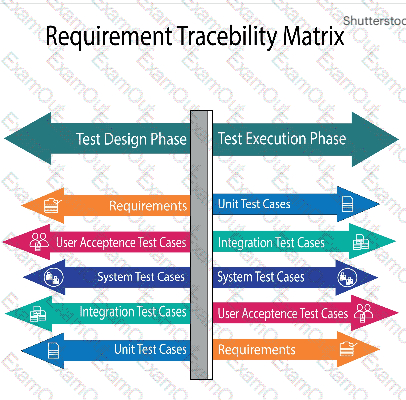
Requirements Traceability Matrix (RTM): This is a primary output of this process. It is a grid that links product requirements from their origin to the deliverables that satisfy them. It ensures that each requirement adds business value by linking it to the business and project objectives and provides a means to track requirements throughout the project life cycle.
Requirements Documentation: This is the other major output, which describes how individual requirements meet the business need for the project.
The Importance of the RTM: It helps ensure that requirements approved in the requirements documentation are delivered at the end of the project and that they are not " lost " during the execution and testing phases.
Analysis of Other Options:
B. Project scope statement: This is the primary output of the Define Scope process, not Collect Requirements. While requirements are an input to defining scope, the formal statement is produced later.
C. WBS dictionary: This is an output of the Create WBS process. It provides detailed information about the work packages after the scope has already been defined and decomposed.
D. Work performance measurements: These are typically associated with the Control processes (like Control Schedule or Control Costs). In the Collect Requirements phase, which is part of Planning, no actual work has been performed yet to measure.
Which is an output from Distribute Information?
Earned value analysis
Trend analysis
Project records
Performance reviews
The Answer Is:
CExplanation:
According to the PMBOK® Guide, the Distribute Information process (referred to as Manage Communications in later editions) involves making relevant information available to project stakeholders as planned.
Project Records: This is a primary output of this process. Project records include correspondence, memos, meeting minutes, and other documents that describe the project. These records should be maintained in a searchable format and are often stored in the Project Management Information System (PMIS).
Other Key Outputs:
Organizational Process Assets (OPA) Updates: Specifically, the project records mentioned above, which become part of the historical database.
Change Requests: Occasionally, the distribution of information reveals the need for a change in the project or the communication plan itself.
Analysis of Other Options:
A. Earned value analysis: This is a tool and technique used in the Control Costs and Report Performance processes to assess project health; it is not an output of distributing information.
B. Trend analysis: This is a tool and technique used in Report Performance and Monitor and Control Project Work to examine project performance over time to determine if it is improving or deteriorating.
D. Performance reviews: These are tools and techniques used in Report Performance or Control Schedule/Costs to compare actual performance against the baseline. While the results of these reviews are distributed, the " reviews " themselves are not the output of the distribution process.
The progressive detailing of the project management plan is called:
expert judgment.
rolling wave planning.
work performance information.
specification.
The Answer Is:
BExplanation:
According to the PMBOK® Guide, project management involves iterative planning as more information becomes available. This specific iterative technique is formally known as rolling wave planning.
Rolling wave planning is a form of progressive elaboration where the work to be accomplished in the near term is planned in detail, while the work far in the future is planned at a higher level.
Mechanism: It is a functional application of the " progressive detailing " mentioned in the question. As the project progresses and more risks and requirements are identified, the " wave " moves forward, and the high-level plans are decomposed into detailed work packages.
Context: This is particularly useful in projects where the full scope is not entirely clear at the start (such as RandD or software development) or in high-uncertainty environments.
A. Expert judgment: This is a tool and technique used in almost every project management process. While experts may help with detailing a plan, " expert judgment " refers to the specialized knowledge or training used to make a decision, not the process of progressive detailing itself.
C. Work performance information: This is an output of various controlling processes (like Control Schedule or Control Costs). it is the processed data used to make decisions, but it is not a planning technique.
D. Specification: A specification is a document that describes the requirements, design, or behavior of a product or service. While a specification can be detailed progressively, it is a document/input, not the act of detailing the overall management plan.
Rolling wave planning is the primary technique used to achieve Progressive Elaboration. In the PMI framework, this acknowledges that as a project evolves, the project management team gains a better understanding of the objectives and deliverables, allowing them to manage the project with greater " granularity " over time.
The links between the processes in the Process Groups are often:
Intuitive
Iterative
Measured
Monitored
The Answer Is:
BExplanation:
According to the PMBOK® Guide, the Project Management Process Groups are not one-time, linear events that happen in isolation. Instead, they are highly interrelated and the links between them are iterative.
The Nature of Iteration: Project management is a " progressive elaboration " of the project management plan. This means that as more information or better estimates become available, the project team must often return to previous process groups to refine the project ' s direction.
Process Links: The output of one process generally becomes an input to another process or is a deliverable of the project. For example:
The Planning group provides the Executing group with the project management plan.
As work is executed, Work Performance Data is generated and sent to the Monitoring and Controlling group.
If the controlling processes identify a significant variance, the team may need to trigger the Planning group again to update the schedule or budget.
Cyclical Interaction: This iterative nature ensures that the project remains aligned with business objectives. It allows for continuous improvement and adjustment throughout the project life cycle until the final objectives are met in the Closing process group.
Comparison with other options:
A. Intuitive: While experienced project managers develop intuition, the formal framework of the PMBOK® Guide is based on structured, documented processes rather than " gut feeling. "
C. Measured: While performance within the process groups is measured (specifically in Monitoring and Controlling), " measured " does not describe the link or relationship between the groups themselves.
D. Monitored: Monitoring is a specific process group (Monitoring and Controlling), but it is not the term used to describe the fundamental, repetitive, and refining relationship that exists between all the groups.
In project management, a temporary project can be:
Completed without planning
A routine business process
Long in duration
Ongoing to produce goods
The Answer Is:
CExplanation:
According to the PMBOK® Guide (Project Management Body of Knowledge), the fundamental definition of a project is a temporary endeavor undertaken to create a unique product, service, or result. PMI clarifies the term " temporary " in the following ways:
Long in Duration (Option C): While a project is " temporary " (meaning it has a defined beginning and end), this does not mean it must be short. A project can last for several years (e.g., building a skyscraper or developing a new aircraft) and still be classified as temporary because it will eventually reach its conclusion.
Routine Business Process (Option B) / Ongoing (Option D): These options describe Operations. Operations are ongoing and repetitive (e.g., a manufacturing line or accounting services), whereas projects are unique and end when their objectives have been met or the project is terminated.
Completed without Planning (Option A): This contradicts all PMI standards. Every project requires a degree of planning (whether predictive/waterfall or adaptive/agile) to ensure that resources are used efficiently and objectives are met.
In the PMI framework, the temporary nature of a project indicates that the project team is disbanded and resources are reassigned once the project’s specific goals are achieved, regardless of how many years the project took to complete.
Which of the following is a narrative description of products, services, or results to be delivered by a project?
Project statement of work
Business case
Accepted deliverable
Work performance information
The Answer Is:
AExplanation:
According to the PMBOK® Guide (specifically in the context of the Develop Project Charter process), the Project Statement of Work (SOW) is a critical narrative document used to define the boundaries of the project before it is formally authorized.
Definition: The SOW is a narrative description of products, services, or results to be delivered by the project. For internal projects, the project initiator or sponsor provides the statement of work based on business needs, product, or service requirements. For external projects, the statement of work can be received from the customer as part of a bid document (e.g., a request for proposal, request for information, or as part of a contract).
Key Components: The SOW typically references:
Business Need: An organization’s business need may be based on a market demand, technological advance, legal requirement, government regulation, or environmental consideration.
Product Scope Description: Documents the characteristics of the product, service, or results that the project will be undertaken to create.
Strategic Plan: Documents the organization ' s strategic goals and ensures the project aligns with the corporate mission.
Comparison with other options:
B. Business case: This document provides the necessary information from a business standpoint to determine whether or not the project is worth the required investment. It focuses on the economic feasibility and " why " of the project, rather than a narrative description of the deliverables.
C. Accepted deliverable: These are products, results, or capabilities produced by a project and validated by the customer or sponsor as meeting their specified acceptance criteria during the Validate Scope process.
D. Work performance information: This consists of the performance data collected from various controlling processes, analyzed in context and integrated based on relationships across areas. It describes how the project is performing (e.g., status of deliverables), but it is not the initial narrative description of what is to be delivered.
Documented identification of a flaw in a project component together with a recommendation is termed a:
corrective action.
preventive action.
non-conformance report,
defect repair.
The Answer Is:
DExplanation:
According to the PMBOK® Guide, specifically within the Direct and Manage Project Work and Perform Integrated Change Control processes, a Defect Repair is the formally documented identification of a non-conformity in a project component with a recommendation to either repair the component or replace it.
Nature of Defect Repair: Unlike actions taken to align future performance, a defect repair is reactive and addresses a specific, existing failure in a deliverable or a component that does not meet quality requirements.
The Change Control Process: Even though it involves " fixing " something that is broken, a defect repair must still be processed through Perform Integrated Change Control if it affects the project baselines or requires a formal change to the project documentation.
Verification: Once a defect repair is implemented, the component must be re-inspected through the Control Quality process to ensure the flaw has been corrected and the component now conforms to the original requirements.
Comparison with Other Options:
Corrective action (A): This is an intentional activity that realigns the performance of the project work with the project management plan. It focuses on the project ' s performance (e.g., getting back on schedule) rather than fixing a specific " flaw " in a physical component.
Preventive action (B): This is an intentional activity that ensures the future performance of the project work is aligned with the project management plan. It is proactive and taken before a flaw or error occurs.
Non-conformance report (C): While this is a document used in many industries to record a flaw, it is not the term the PMBOK® Guide uses to define the category of change or the recommendation to fix the component. The official PMI term for the recommended action is " Defect Repair. "
What does earned value (EV) measure?
Budgeted work that has been completed
Total costs incurred while accomplishing work
Budget associated with planned work
Cost efficiency of budgeted resources
The Answer Is:
AExplanation:
In accordance with the PMBOK® Guide and the Standard for Project Management, Earned Value (EV) is a critical metric in the Earned Value Management (EVM) framework used within the Control Costs process.
Earned Value (EV): It is defined as the measure of work performed expressed in terms of the budget authorized for that work. Essentially, it represents the budgeted amount for the work that has actually been completed to date. It is often referred to as the Budgeted Cost of Work Performed (BCWP).
Analysis of other options:
B. Total costs incurred (Actual Cost - AC): This represents the realized cost incurred for the work performed on an activity during a specific time period.
C. Budget associated with planned work (Planned Value - PV): This is the authorized budget assigned to scheduled work. It represents what we intended to do, whereas EV represents what we actually achieved.
D. Cost efficiency (Cost Performance Index - CPI): This is a ratio derived from EV and AC (
$$CPI = EV / AC$$
). While EV is used to calculate efficiency, EV itself is a measure of value, not a ratio of efficiency.
Per PMI standards, EV is used to determine the project ' s progress. If $EV < PV$, the project is behind schedule; if $EV < AC$, the project is over budget. It serves as the bridge between the physical progress of the work and the financial expenditure.
Which of the following is an enterprise environmental factor that can influence the Develop Project Charter process?
Organizational standard processes
Marketplace conditions
Historical information
Templates
The Answer Is:
BExplanation:
According to the PMBOK® Guide, the Develop Project Charter process involves internal and external influences categorized as either Enterprise Environmental Factors (EEFs) or Organizational Process Assets (OPAs).
Enterprise Environmental Factors (EEFs): These are conditions, not under the control of the project team, that influence, constrain, or direct the project. They can be internal (e.g., organizational culture, infrastructure) or external (e.g., currency rates, legal requirements).
Marketplace Conditions: This is a specific external EEF. It refers to the current state of the market, including competitor performance, market share, brand recognition, and trademarks. These factors help determine if a project is viable or necessary to maintain a competitive edge.
Other EEFs for Project Charter:
Government or industry standards (e.g., regulatory agency regulations, codes of conduct).
Legal and regulatory requirements and/or constraints.
Organizational culture and political climate.
Governance framework.
Stakeholder expectations and risk thresholds.
Comparison with other options:
A. Organizational standard processes: These are Organizational Process Assets (OPAs). They are the plans, processes, policies, procedures, and knowledge bases specific to and used by the performing organization.
C. Historical information: This is a component of OPAs (specifically the corporate knowledge base). It includes lessons learned and records from previous projects used to help authorize the current one.
D. Templates: These are OPAs. They are pre-formatted documents (like a Project Charter template) provided by the organization to ensure consistency across projects.
A work package has been scheduled to cost $1,000 to complete and was to be finished today. As of today, the actual expenditure is $1,200 and approximately half of the work has been completed. What is the cost variance?
-700
-200
200
500
The Answer Is:
AExplanation:
To determine the Cost Variance (CV), we must first identify the key Earned Value Management (EVM) metrics provided in the scenario based on the PMBOK® Guide:
Planned Value (PV): The authorized budget assigned to scheduled work. Since the work was scheduled to be finished today, $PV = \$1,000$.
Actual Cost (AC): The realized cost incurred for the work performed. The scenario states the expenditure is $AC = \$1,200$.
Earned Value (EV): The measure of work performed expressed in terms of the budget authorized for that work. Since approximately half (50%) of the work is completed, we calculate EV as:
$$EV = \text{Budget at Completion (BAC)} \times \text{Percentage Complete}$$
$$EV = \$1,000 \times 0.50 = \$500$$
The Formula for Cost Variance (CV) is:
$$CV = EV - AC$$
Calculation:
$$CV = \$500 - \$1,200 = -\$700$$
Interpretation according to PMI Standards:
A negative CV indicates that the project is over budget relative to the work performed. In this case, the work package is $700 over budget.
Choice A is the correct calculation.
Choice B (-200) is the result of $PV - AC$, which is not a standard EVM variance formula.
Choice C (200) is the absolute difference between PV and AC, ignoring the actual work completed (EV).
Choice D (500) represents the EV itself, not the variance.
Monte Carlo is which type of risk analysis technique?
Probability
Quantitative
Qualitative
Sensitivity
The Answer Is:
BExplanation:
According to the PMBOK® Guide, specifically within the Perform Quantitative Risk Analysis process, Monte Carlo simulation is a primary tool and technique used to numerically analyze the combined effect of individual project risks and other sources of uncertainty on overall project objectives.
In the PMI framework, risk analysis is divided into two main stages:
Perform Qualitative Risk Analysis: The process of prioritizing individual project risks by assessing their probability of occurrence and impact. This is subjective and uses descriptors like " High, " " Medium, " or " Low. "
Perform Quantitative Risk Analysis: The process of numerically analyzing the effect of identified risks on overall project objectives. This is where Monte Carlo simulation resides.
Simulation: It uses a computer model to simulate the project many times (often thousands of iterations) using random values for variable inputs (like cost or duration) based on probability distributions (e.g., triangular, normal, or beta).
Output: The result is a probability distribution of the total project cost or completion date. It helps the project manager determine the " probability of success " (e.g., " There is an 80% chance we will finish the project for $500,000 or less " ).
S-Curve: The results are often plotted on a cumulative frequency distribution, known as an S-curve.
A. Probability: While Monte Carlo uses probability distributions as inputs, " Probability " is a component of risk, not the category of the analysis technique itself.
C. Qualitative: This is the earlier stage of risk management. Qualitative analysis is used to quickly filter and prioritize risks, whereas Monte Carlo is used for a deep-dive, data-driven numerical assessment.
D. Sensitivity: Sensitivity analysis is another tool within the Perform Quantitative Risk Analysis process (often visualized with a Tornado Diagram). While it is related, Monte Carlo is a simulation technique, while Sensitivity analysis looks at the impact of changing one variable at a time.
The primary benefit of using a Monte Carlo simulation is that it quantifies the overall project risk rather than just looking at individual risks in isolation. This allows for more accurate contingency reserve planning and realistic communication with stakeholders regarding project deadlines and budgets.
During a project team meeting, one of the team members suggested a product functionality that would immensely benefit the customer. The project manager documents the request for later analysis.
What is this an example of?
Monitoring the traceability matrix
Managing the scope
Maintaining the product backlog
Managing the cost benefit
The Answer Is:
BExplanation:
In accordance with the PMBOK® Guide, specifically the Define Scope and Control Scope processes, a project manager is responsible for ensuring that the project includes all the work required, and only the work required, to complete the project successfully.
Why Choice B is correct:
Scope Management: When a new functionality is suggested, it represents a potential change to the agreed-upon project scope. By documenting the request for " later analysis, " the project manager is following formal Scope Management procedures.
Avoiding Gold Plating: The PM must prevent " Gold Plating " —adding extra features that were not requested or approved—even if they " immensely benefit " the customer.
Integrated Change Control: Documenting the request is the first step in the Perform Integrated Change Control process. The PM will later analyze the impact of this new functionality on time, cost, and risk before presenting it to the Change Control Board (CCB) or the customer for approval.
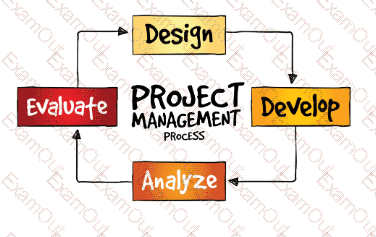
Analysis of other options:
A (Monitoring the traceability matrix): The Requirements Traceability Matrix (RTM) links product requirements from their origin to the deliverables that satisfy them. While the new request might eventually end up in the RTM if approved, documenting a new idea is a scope definition activity, not a monitoring activity of existing requirements.
C (Maintaining the product backlog): This is a term primarily used in Agile/Adaptive environments. While documenting a new idea in a backlog is common in Agile, the term " Managing the scope " is the more universal project management answer (covering both predictive and adaptive) that describes the act of controlling what is and isn ' t included in the project boundaries.
D (Managing the cost benefit): A Cost-Benefit Analysis is a technique used to justify a project or a change. While the PM will perform this analysis later to see if the functionality is worth the investment, the act of capturing the request and controlling the project boundaries is fundamentally an exercise in scope management.
Key Concept: The Project Management Institute (PMI) emphasizes that any change to the project scope, no matter how beneficial, must be formally documented and analyzed. By documenting the suggestion instead of immediately implementing it, the project manager protects the Scope Baseline and ensures that the project remains focused on its original objectives and budget.
Conflict should be best addressed in which manner?
Early, in private, using a direct, collaborative approach
Early, in public, using an indirect, collaborative approach
Early, in private, using an indirect, cooperative approach
As late as possible, in public, using a direct, confrontational approach
The Answer Is:
AExplanation:
According to the PMBOK® Guide, specifically within the Manage Project Team process, conflict management is a key tool and technique. Conflict is inevitable in a project environment, but how it is handled determines whether it becomes a functional or dysfunctional force.
Timing (Early): Conflicts should be addressed early. Proactive management prevents minor disagreements from escalating into major issues that could impact team morale, productivity, and the project schedule.
Setting (In Private): As a general rule, conflict should be addressed in private. Handling disagreements away from the larger group or stakeholders protects the professional reputation of the individuals involved and fosters a safer environment for honest communication.
Approach (Direct/Collaborative): The most effective method for long-term resolution is a direct, collaborative approach (also known as the Problem Solving or Confronting technique). This involves treating the conflict as a problem to be solved, examining alternatives, and requiring a " give-and-take " attitude from all parties to reach a consensus.
Analysis of other choices:
Choice B (Early, in public, using an indirect, collaborative approach): While " early " and " collaborative " are positive, " in public " is generally discouraged as it can lead to defensiveness, embarrassment, and a breakdown in team trust.
Choice C (Early, in private, using an indirect, cooperative approach): " Indirect " or " cooperative " (often associated with Smoothing or Accommodating) may provide temporary relief but often fails to address the root cause of the conflict, leading to the issue resurfacing later.
Choice D (As late as possible, in public, using a direct, confrontational approach): This is the least desirable method. Waiting " as late as possible " allows the conflict to fester, while " public " and " confrontational " (associated with Forcing) usually results in a win-lose situation that damages long-term team dynamics.
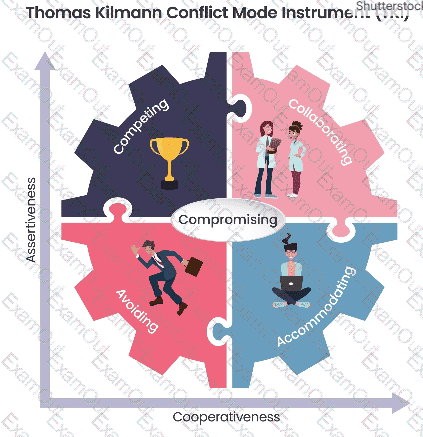
Match the life cycle type to when its requirements are defined.

The Answer Is:

Explanation:
 A screenshot of a login box Description automatically generated
According to PMI standards, the choice of life cycle determines how the project scope is managed and when the " What " of the project is finalized.
Predictive (Waterfall): This lifecycle is used when the product is well understood. Requirements are locked in during the planning phase. Any changes later usually require a formal change request. This provides high predictability but low flexibility.
Iterative: The goal here is to arrive at the correct solution through successive prototypes or versions. Requirements are revisited and refined based on feedback from the previous iteration. It focuses on the " correctness " of the solution.
Incremental: This life cycle delivers a finished, usable portion of the product in each interval. Requirements for a specific " slice " of the project are defined and delivered, with subsequent increments adding more features until the total scope is met.
Adaptive (Agile): In highly uncertain environments, requirements are never " finished " until the project is. They are maintained in a Product Backlog and refined/prioritized just before the start of a sprint or iteration. This allows the team to respond to change and deliver value quickly.
Understanding these distinctions is crucial for the Project Integration Management knowledge area. The Project Manager must choose the life cycle that best fits the project ' s level of uncertainty, complexity, and the need for frequent delivery.
In a project, total float measures the:
Ability to shuffle schedule activities to lessen the duration of the project.
Amount of time an activity can be extended or delayed without altering the project finish date.
Cost expended to restore order to the project schedule after crashing the schedule.
Estimate of the total resources needed for the project after performing a forward pass.
The Answer Is:
BExplanation:
In accordance with the PMBOK® Guide (Project Schedule Management), Total Float (also known as " slack " ) is a critical component of the Critical Path Method (CPM). It represents the amount of time that a schedule activity can be delayed or extended from its early start date without delaying the project finish date or violating a schedule constraint.
Calculation: Total float is calculated by subtracting the Early Start (ES) from the Late Start (LS), or the Early Finish (EF) from the Late Finish (LF).
$Total\ Float = LS - ES$ or $LF - EF$
Critical Path: Activities on the critical path typically have a total float of zero. This means any delay to a critical path activity will result in a day-for-day delay of the entire project completion date.
Flexibility: Positive total float indicates that there is " cushion " or flexibility in the schedule for those specific activities. Negative float can occur when a constraint (such as a fixed deadline) is violated.
Analysis of Distractors:
A. Ability to shuffle schedule activities: This refers more generally to schedule optimization or resource leveling techniques, not the specific mathematical definition of float.
C. Cost expended to restore order: This is unrelated to float; " crashing " is a schedule compression technique that involves adding resources to shorten the duration, which usually increases cost.
D. Estimate of the total resources: The " forward pass " is used to determine the Early Start and Early Finish dates of activities. While it is part of the calculation for float, it does not estimate the " total resources " required for the project.
A method of obtaining early feedback on requirements by providing a working model of the expected product before actually building is known as:
Benchmarking.
Context diagrams.
Brainstorming.
Prototyping.
The Answer Is:
DExplanation:
According to the PMBOK® Guide and the Standard for Project Management, Prototyping is a specific tool and technique used in the Collect Requirements process. It involves creating a working version of the product before building the final, functional version.
As per PMI standards, prototyping supports the concept of progressive elaboration. It provides a tangible model that allows stakeholders to visualize and interact with the product, which helps in:
Obtaining early feedback: Stakeholders can identify missing or misunderstood requirements early in the lifecycle.
Mitigating risk: It reduces the likelihood of costly changes later in the project by validating requirements before full-scale production.
Stakeholder engagement: It provides a common understanding of the product expectations among the project team and the customers.
The other options are incorrect based on the following PMI definitions:
Benchmarking: This involves comparing actual or planned practices (such as processes and operations) to those of comparable organizations to identify best practices and generate ideas for improvement. It is a comparative tool, not a modeling tool.
Context diagrams: This is a visual representation of the product scope that shows a business system (process, equipment, computer system, etc.) and how people and other systems (actors) interact with it. It is a high-level mapping of interfaces, not a " working model. "
Brainstorming: This is a general data-gathering technique used to identify a list of ideas in a short period. It is a verbal or written collaborative exercise and does not involve building physical or digital models.
As per the PMI Lexicon of Project Management Terms, prototypes allow for " storyboarding " and " mock-ups, " which are essential for complex products where requirements may be difficult to define using text alone.
Which input to Collect Requirements is used to identify stakeholders who can provide information on requirements?
Stakeholder register
Scope management plan
Stakeholder management plan
Project charter
The Answer Is:
AExplanation:
According to the PMBOK® Guide and the Standard for Project Management, the Stakeholder Register is the specific input to the Collect Requirements process used to identify which stakeholders are capable of providing detailed information regarding project and product requirements.
As per PMI standards, the Collect Requirements process is the process of determining, documenting, and managing stakeholder needs and requirements to meet project objectives. The Stakeholder Register is essential here because:
Identification: It contains the list of all identified stakeholders who may have an interest in or impact on the project.
Requirement Sources: It helps the project team identify " key " stakeholders who can provide information about specific requirements, including their expectations and their level of influence.
Categorization: It allows the project manager to target specific groups (e.g., end-users, sponsors, or regulators) for requirement-gathering sessions like interviews or focus groups.
The other options are incorrect based on the following PMI document definitions:
Scope management plan: This is a Planning document that describes how the scope will be defined, developed, monitored, controlled, and verified. It provides the process for collecting requirements but does not list the people (stakeholders) themselves.
Stakeholder management plan: (Now often called the Stakeholder Engagement Plan) This document identifies the management strategies and actions required to effectively engage stakeholders. While it uses the register as an input, its focus is on engagement strategy rather than being the primary list used to pull requirement sources.
Project charter: The charter is an input to Collect Requirements because it provides the high-level project description and high-level requirements. However, it does not provide the granular list of stakeholders needed to extract detailed functional or technical requirements.
As per the PMI Lexicon of Project Management Terms, the Stakeholder Register is a living document that ensures the project team remains aligned with the individuals whose needs define the project ' s success.
Labor, materials, equipment, and supplies are examples of:
Resource attributes.
Resource types.
Resource categories.
Resource breakdown structures (RBS).
The Answer Is:
CExplanation:
According to the PMBOK® Guide, specifically within the Estimate Activity Resources process, labor (people), materials, equipment, and supplies are the primary examples of Resource Categories.
Definition: Resource categories are high-level groupings of resources. Identifying these categories helps the project manager ensure that all necessary components for a task are accounted for beyond just human labor.
The Difference between Category and Type:
Resource Category: The broad group (e.g., Labor, Equipment, Material).
Resource Type: The specific skill level or technical specification within that category (e.g., Senior Engineer, 5-ton Crane, Grade-A Steel).
Resource Requirements: The output of this process is the Resource Requirements document, which identifies the quantity and type of resources required for each activity in a work package. This information is then used to build the Resource Breakdown Structure.
Comparison with Other Options:
Resource Attributes (A): These are the specific characteristics associated with each resource, such as its location, availability, technical skills, or cost rate. They provide more detail than the category.
Resource Types (B): As noted above, this is the level of detail within a category (e.g., " Electrician " is a type within the " Labor " category).
Resource Breakdown Structures (D): The RBS is a hierarchical representation of resources by category and type. While labor and materials are found in an RBS, they themselves are the categories that form the structure.
The project manager has following information about duration for an activity:
* Most likely [tM] - 15 days
* Pessimistic [tP] - 20 days
* Optimistic [tO] - 10 days
What is the estimated duration of this activity, according to the triangular distribution technique?
10 days
15 days
12.5 days
5 days
The Answer Is:
BExplanation:
According to the PMBOK® Guide, specifically within the Estimate Activity Durations process, project managers use Three-Point Estimating to improve the accuracy of activity duration estimates. This technique considers uncertainty and risk by using three estimates:
Optimistic ($t_O$): The best-case scenario (10 days).
Most Likely ($t_M$): The most realistic scenario (15 days).
Pessimistic ($t_P$): The worst-case scenario (20 days).
There are two common formulas used for three-point estimating. The question specifically asks for the Triangular Distribution:
The Formula:
$$E = \frac{t_O + t_M + t_P}{3}$$
The Calculation:
$$E = \frac{10 + 15 + 20}{3}$$
$$E = \frac{45}{3}$$
$$E = 15 \text{ days}$$
Why other options are incorrect:
Option A (10 days): This is simply the Optimistic estimate ($t_O$), which ignores the most likely and pessimistic scenarios.
Option C (12.5 days): This value does not correspond to any standard PMBOK duration estimation formula based on the numbers provided.
Option D (5 days): This is significantly lower than even the optimistic estimate and has no mathematical basis in this context.
Note on Beta Distribution (PERT):
It is important to distinguish this from the Beta Distribution (often used in PERT), which gives more weight to the " Most Likely " estimate. If the question had asked for the Beta distribution, the calculation would be:
$$E = \frac{t_O + 4t_M + t_P}{6} = \frac{10 + (4 \times 15) + 20}{6} = \frac{90}{6} = 15 \text{ days}$$
An output of the Direct and Manage Project Work process is:
Deliverables.
Activity lists.
A work breakdown structure.
A scope statement.
The Answer Is:
AExplanation:
In accordance with the PMBOK® Guide (Project Integration Management), the Direct and Manage Project Work process is the process of leading and performing the work defined in the project management plan and implementing approved changes to achieve the project’s objectives.
The primary and most significant output of this process is Deliverables.
Nature of Deliverables: A deliverable is any unique and verifiable product, result, or capability to perform a service that is required to be produced to complete a process, phase, or project.
Execution Focus: Because Direct and Manage Project Work is the " doing " phase of the project, this is where the actual physical or digital components of the project are created.
Data Flow: Once deliverables are produced in this process, they typically move to the Control Quality process for inspection to become " Verified Deliverables, " and subsequently to Validate Scope to become " Accepted Deliverables. "
Other Outputs: This process also produces Work Performance Data, Issue Logs, Change Requests, and updates to the Project Management Plan and project documents.
Analysis of Distractors:
B. Activity lists: This is an output of the Define Activities process (Project Schedule Management). It is a planning document, not a result of the execution process.
C. A work breakdown structure (WBS): This is an output of the Create WBS process (Project Scope Management). It serves as a framework for the work but is not the work itself.
D. A scope statement: This is an output of the Define Scope process (Project Scope Management). It provides the detailed description of the project and product but is a planning artifact.
While implementing an approved change, a critical defect was introduced. Removing the defect will delay the product delivery. What is the MOST appropriate approach to managing this situation?
Utilize the change control process.
Crash the schedule to fix the defect.
Leave the defect in and work around it.
Fast-track the remaining development.
The Answer Is:
AExplanation:
According to the PMBOK® Guide, specifically within the Perform Integrated Change Control process, any event that impacts the project baselines (Scope, Schedule, or Cost) must be managed through a formal process to ensure the project remains aligned with stakeholder expectations and organizational goals.
Impact on Baselines: The introduction of a critical defect and the subsequent delay in product delivery constitute a significant variance from the Schedule Baseline. In professional project management, you cannot unilaterally change a baseline without formal authorization.
The Role of Change Control: Even though the defect resulted from an already approved change, the " fix " itself is a new action that consumes time and potentially budget. The project manager must document this impact and submit a Change Request for defect repair.
Stakeholder Transparency: Utilizing the change control process ensures that the Sponsor and Customer are aware of the delay. It allows the Change Control Board (CCB) to evaluate the trade-offs: Is the delivery date more critical than the defect? Should the project be delayed, or should the defect be managed as a " known issue " for a later release?
Data-Driven Decision Making: This approach prevents " Gold Plating " or unauthorized schedule slippage. It ensures that the impact is analyzed, recorded in the Change Log, and that the Project Management Plan is updated to reflect the new reality.
Comparison with other options:
B. Crash the schedule to fix the defect: Crashing (adding resources) is a schedule compression technique that typically increases Cost. This should only be done after the change control process has evaluated the options and authorized the additional spend.
C. Leave the defect in and work around it: Since the defect is described as critical, ignoring it would likely violate the Quality Management Plan and result in a failure to meet acceptance criteria during Validate Scope.
D. Fast-track the remaining development: Fast-tracking (performing tasks in parallel) increases Risk. Like crashing, this is a tactical response that should only be implemented after the impact of the defect has been formally processed and the strategy has been approved.