You need to provide connectivity to storage1. The solution must meet the PaaS networking requirements and the business requirements.
What should you include in the solution?
You need to configure the default route on Vnet2 and Vnet3. The solution must meet the virtual networking requirements.
What should you use to configure the default route?
You need to configure the default route in Vnet2 and Vnet3. The solution must meet the virtual networking requirements.
What should you use to configure the default route?
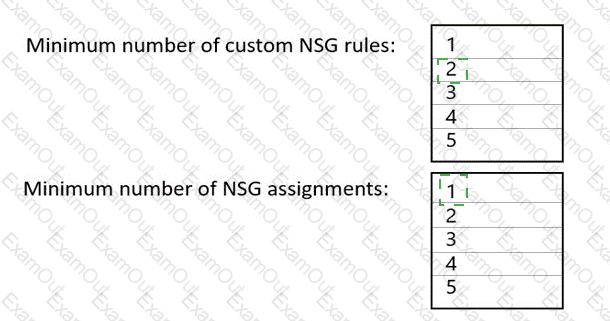
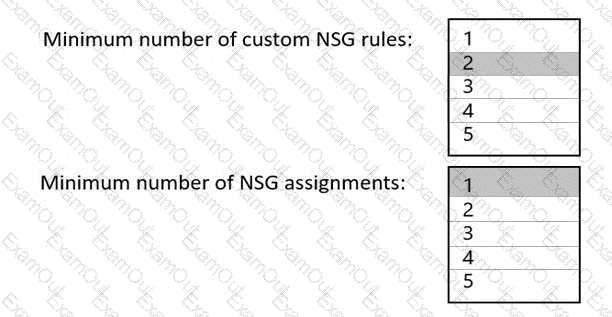
You need to restrict traffic from VMScaleSet1 to VMScaleSet2. The solution mus t meet the virtual networking requirements.
What is the minimum number of custom NSG rules and NSG assignments required? To answer, select the appropriate options in the answer area.
NOTE: Each correct selection is worth one point.
Ite rule for the 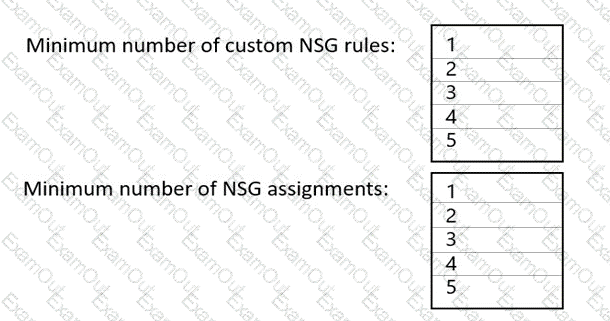
You need to provide access to storage2. The solution must meet the PaaS networking requirements and the business requirements.
Which connectivity method should you use?
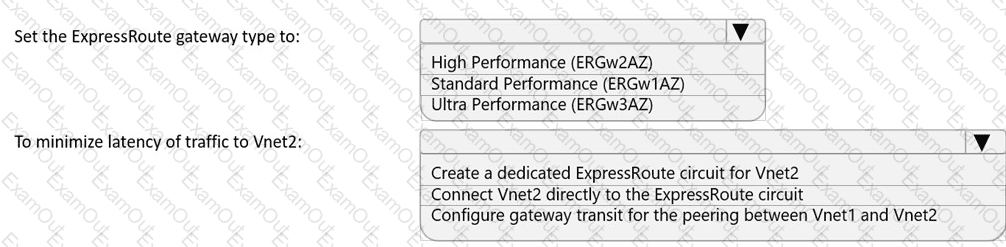
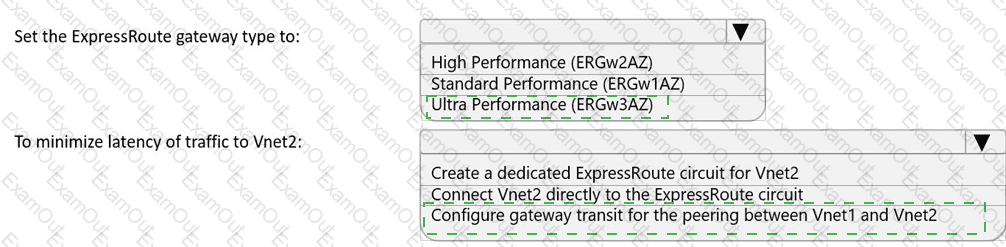
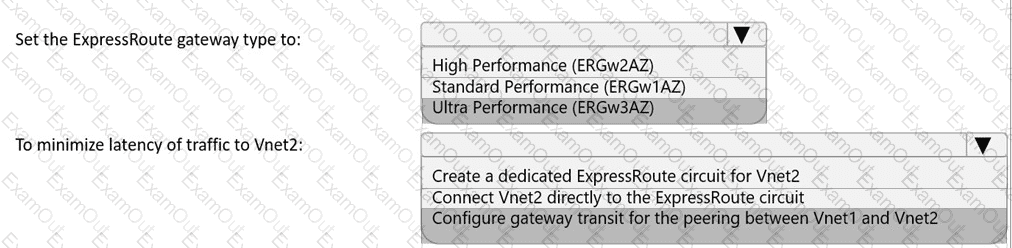
You need to recommend a configuration for the ExpressRoute connection from the Boston datacenter. The solution must meet the hybrid networking requirements and business requirements.
What should you recommend? To answer, select the appropriate options in the answer area.
NOTE: Each correct selection is worth one point.
Your company, named Contoso, Ltd, has an Azure subscription that contains the resources show in the following table.
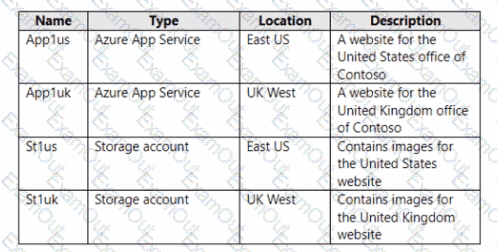
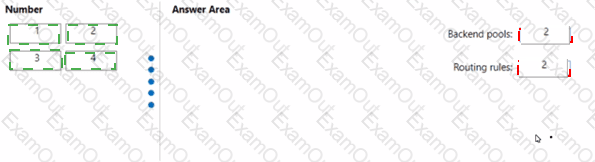
You plan to deploy Azure Front Door. The solution must meet the following requirement:
• Requests to a URL of https://co ntoso.a zurefd .net/uk must be routed to App1uk.
• Requests to a URL of https://contoso.azurefd.net/us must be routed to App1us.
• Requests to a URL of https://contoso .azurefd.net/images must be routed to the storage account closest to the user.
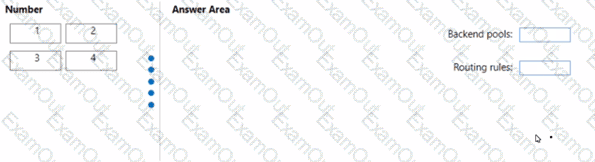
What is the minimum number of backend pools and routing rule s you should create? To answer, the appropriate number to the correct component. Each number may be used once, more than once, or not at all. You may need to drag the spilt bar between panes scroll to view content:
Note: Each correct selection is worth one point.
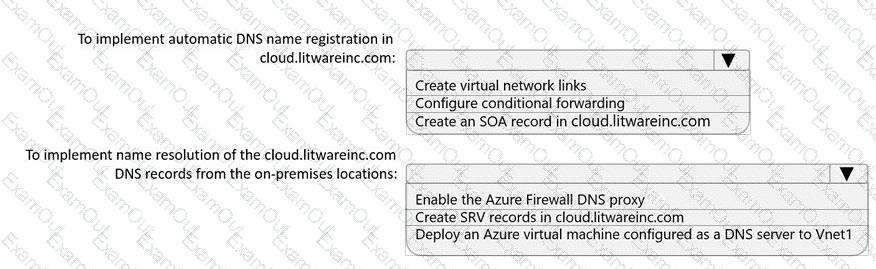
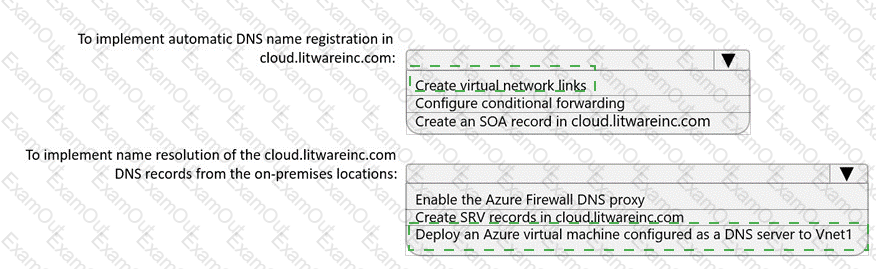
You need to i mplement name resolution for the cloud.liwareinc.com. The solution must meet the networking requirements.
What should you do? To answer, select the appropriate options in the answer area.
NOTE: Each correct selection is worth one point.
You need to implement a P2S VPN for the users in the branch office. The solution must meet the hybrid networking requirements.
What should you do? To answer, select the appropriate options in the answer area.
NOTE: Each correct selection is worth one point.


You have the Azure environment shown In the Azure Environment exhibit. (Click the Azure Environment tab.) The settings for each subnet are shown in the following table.

The Firewalls and virtual networks settings for storage1 are configured as shown in the Storage1 exhibit. (Click the Storage1 tab.) For each of the following statements, select Yes if the statement is true. Otherwise, select No. NOTE: Each correct selection is worth one point.