-
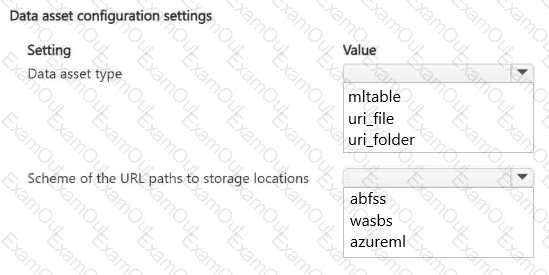
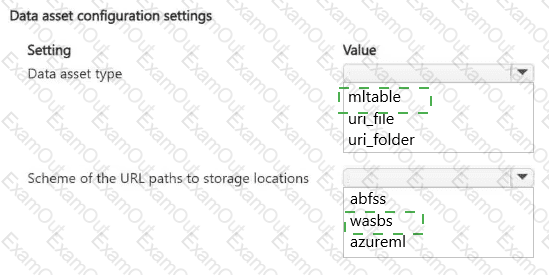
You have an Azure Machine Learning workspace and a collection of image files stored in two Azure Blob Storage accounts.
You need to configure data asset properties.
Which values should you use in your configuration? To answer, select the appropriate options in the answer area.
NOTE: Each correct selection is worth one point.
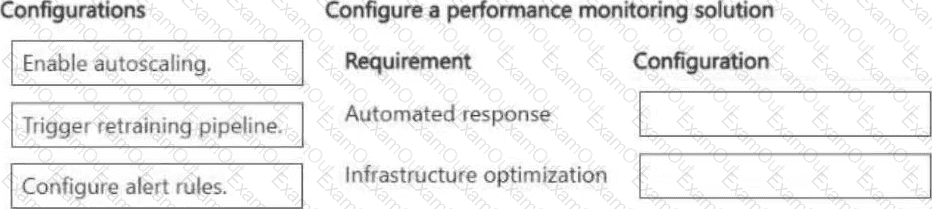
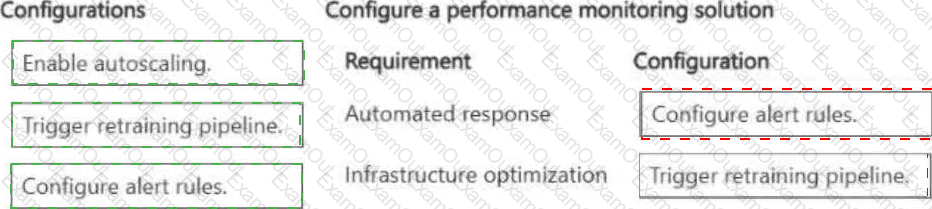
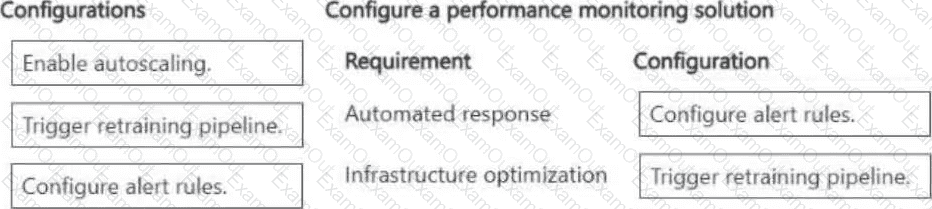
A team deploys a machine learning model to a managed online endpoint. The team monitors model performance and data quality metrics in production.
When monitoring thresholds are exceeded, the team requires an automated operational response that notifies downstream systems.
You need to configure the monitoring solution to meet the requirements.
Which configuration should you associate with each requirement as a first step? To answer, move the appropriate configurations to the correct requirements. You may use each configuration once, more than once, or not at all. You may need to move the split bar between panes or scroll to view content. NOTE: Each correct selection is worth one point.
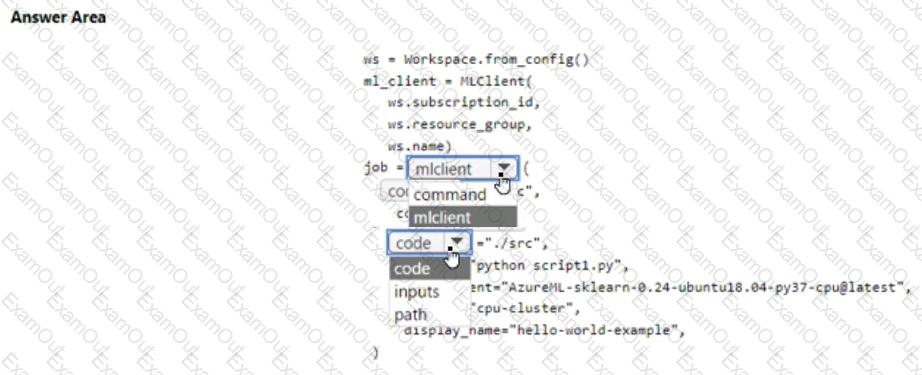
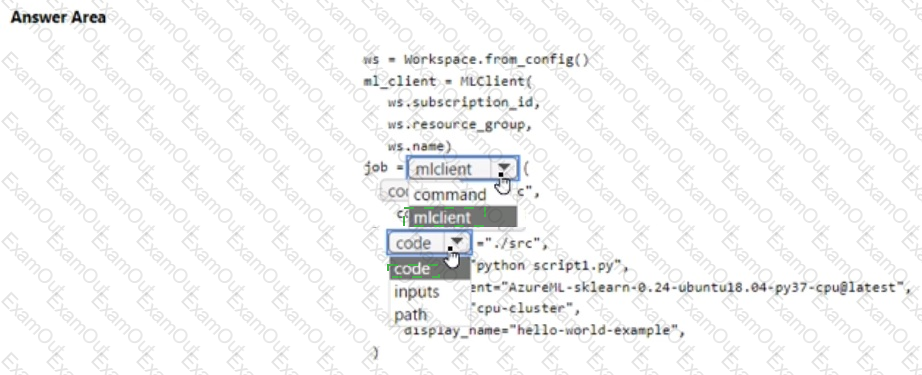
You create an Azure Machine learning workspace. The workspace contains a folder named src. The folder contains a Python script named script 1 .py.
You use the Azure Machine Learning Python SDK v2 to create a control script. You must use the control script to run script l.py as part of a training job.
You need to complete the section of script that defines the job parameters.
How should you complete the script? To answer, select the appropriate options in the answer area.
NOTE: Each correct selection is worth one point.
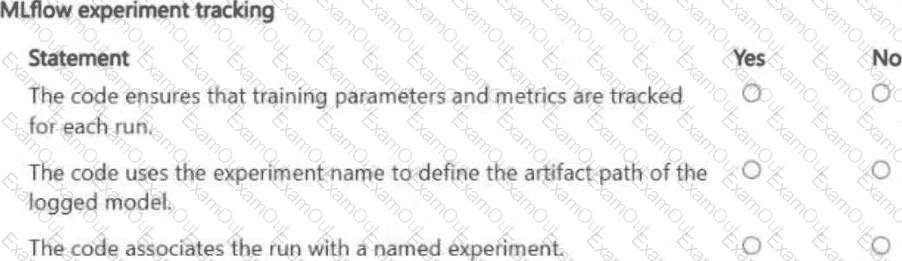
You train a model in Azure Machine Learning.
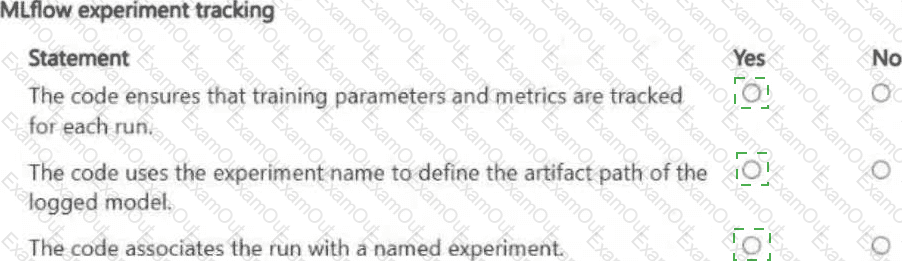
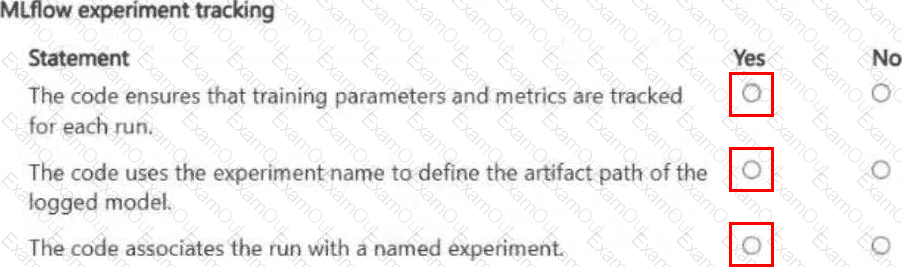
You plan to capture experiment details for later comparison. The training code must log parameters and metrics for each run.
You review the following training script.
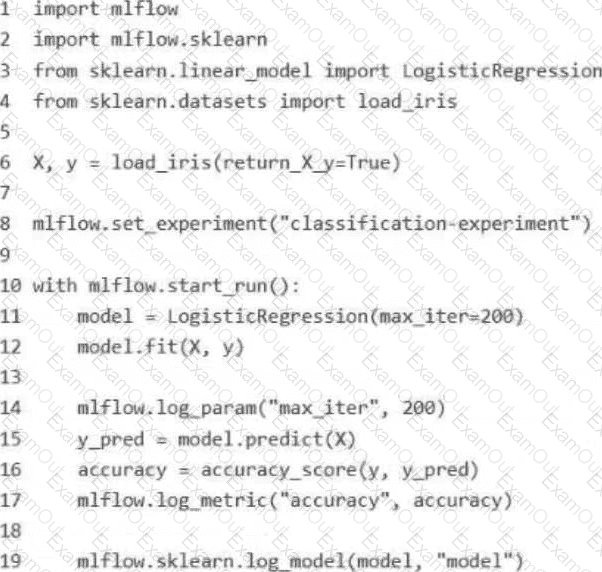
You need to verify whether the training script meets the experiment tracking requirement.
For each of the following statements, select Yes if the statement is true. Otherwise, select No. NOTE: Each correct selection is worth one point.
You have an Azure Machine Learning workspace.
You plan to run a job to tram a model as an MLflow model output.
You need to specify the output mode of the MLflow model.
Which three modes can you specify? Each correct answer presents a complete solution.
NOTE: Each correct selection is worth one point.
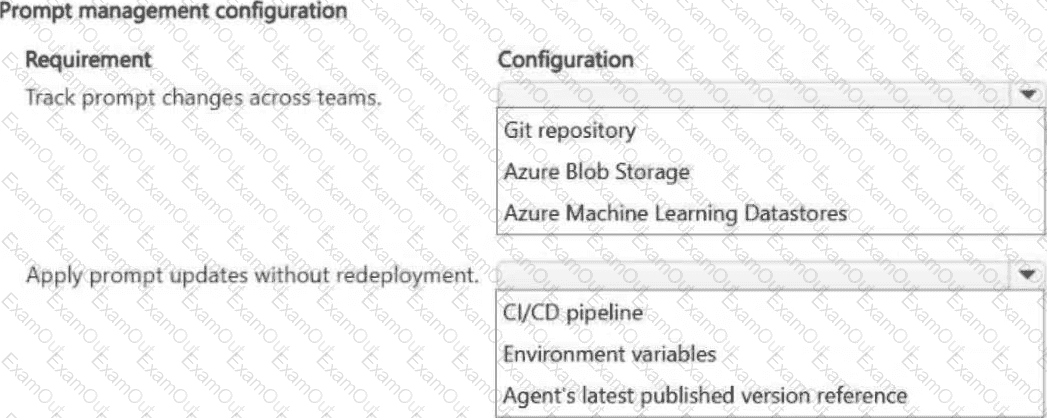
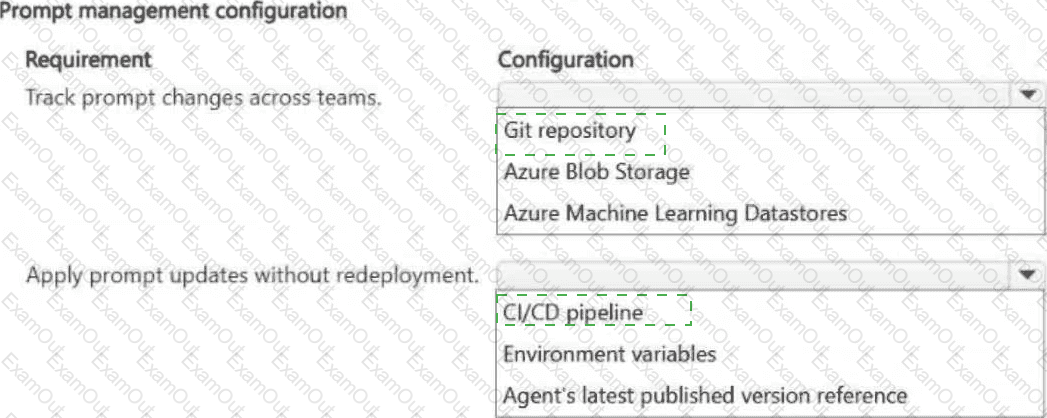
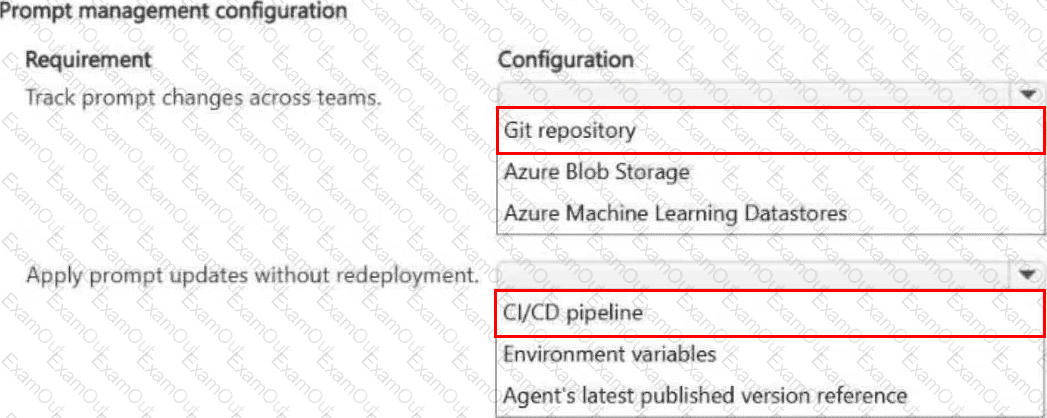
A team is building a generative AI agent by using Retrieval-Augmented Generation (RAG) in Microsoft Foundry.
The team frequently updates prompt content. The team must be able to track changes across contributors while avoiding full application redeployments.
You need to enable rapid prompt iteration with traceability. Applications consuming the agent must be able to use updated prompts without requiring redeployment.
What should you configure for each requirement? To answer, select the appropriate options in the answer area. NOTE: Each correct selection is worth one point.
-
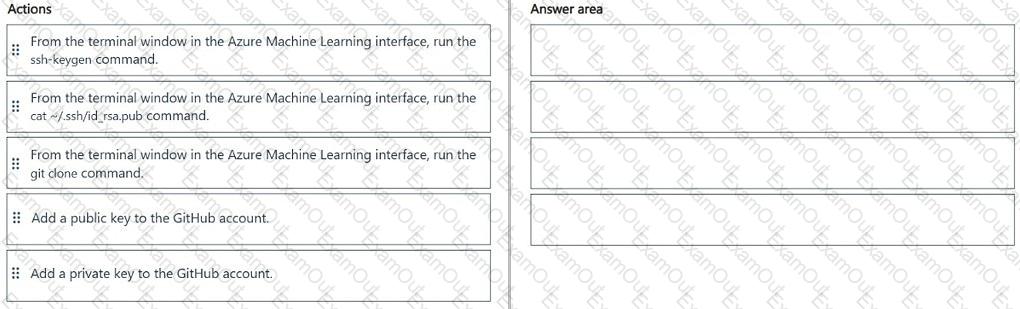
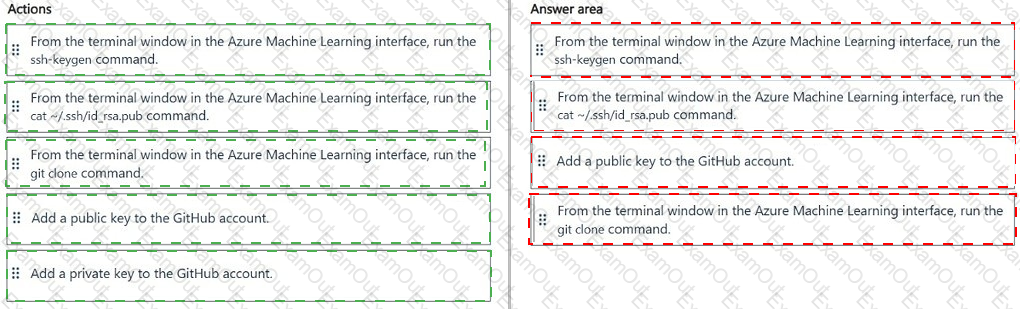
You have an existing GitHub repository containing Azure Machine Learning project files.
You need to clone the repository to your Azure Machine Learning shared workspace file system.
Which four actions should you perform in sequence? To answer, move the appropriate actions from the list of actions to the answer area and arrange them in the correct order.
NOTE: More than one order of answer choices is correct. You will receive credit for any of the correct orders you select.
-
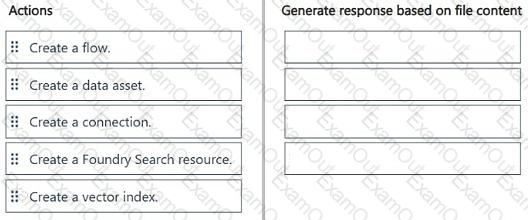
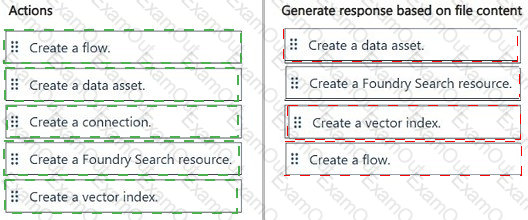
You have a Microsoft Foundry project with a connected Azure OpenAI Service model.
You have a set of text files stored locally on your computer.
You must set up a flow that will generate responses based on the content of your local files.
You need to implement a solution.
Which four actions should you perform in sequence? To answer, move the appropriate actions from the list of actions to the answer area and arrange them in the correct order.
You are preparing training data for a fine-tuning job in Microsoft Foundry.
Real production conversations cannot be used due to compliance requirements.
You need to generate synthetic interaction data that can be used for fine-tuning a generative model.
What should you do?
A team deploys a classification model to production and scores incoming customer data daily.
After several weeks, business stakeholders report unexpected changes in prediction behavior, even though the endpoint remains healthy.
You need to determine whether data drift is occurring and if it is, identify the appropriate actions.
Which action should you perform for each observed signal? To answer, move the appropriate actions to the correct observed signals. You may use each action once, more than once, or not at all. You may need to move the split bar between panes or scroll to view content.
NOTE: Each correct selection is worth one point.