You configured an SD-WAN rule with the best quality strategy and selected the predefined health check, Default_FortiGuard, to check the link performances against FortiGuard servers.
For the quality criteria, you selected Custom-profile-1.
Which factors does FortiGate use, and in which order. to determine the link that it should use to steer the traffic?
You want FortiGate to use SD-WAN rules to steer local-out traffic.
Which two constraints should you consider? (Choose two.)
Refer to the exhibits.
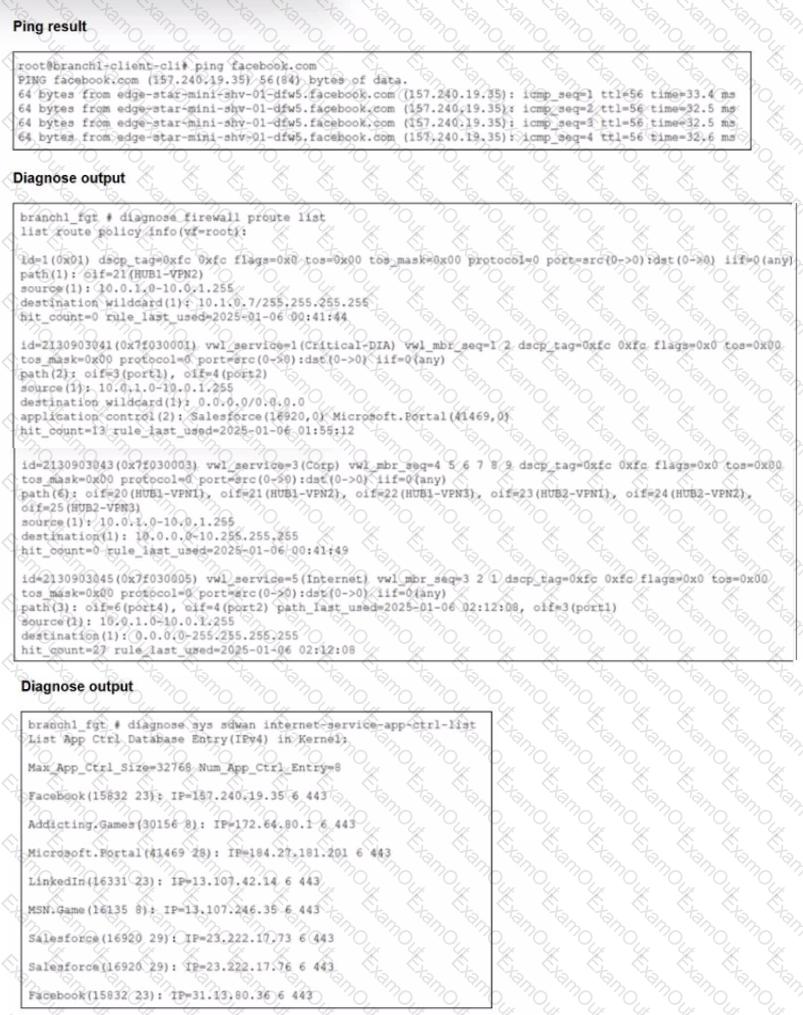
You connect to a device behind a branch FortiGate device and initiate a ping test. The device is part of the LAN subnet and its IP address is 10.0.1.101.
Based on the exhibits, which interface uses branch 1_fgt to steer the test traffic?
Refer to the exhibits.
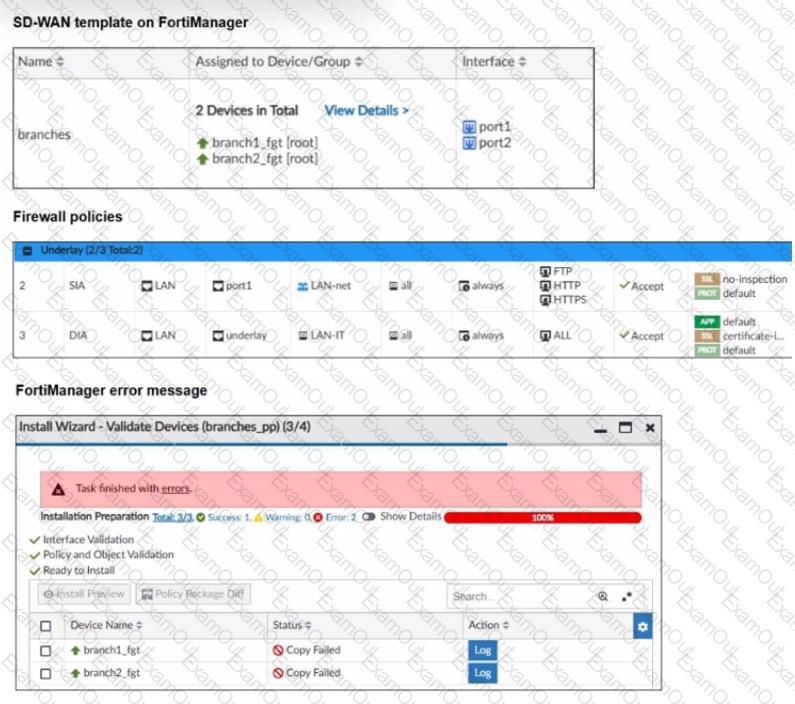
You use FortiManager to manage the branch devices and configure the SD-WAN template. You have configured direct internet access (DIA) for the IT department users. Now. you must configure secure internet access (SIA) for all local LAN users and have set the firewall policies as shown in the second exhibit.
Then, when you use the install wizard to install the configuration and the policy package on the branch devices, FortiManager reports an error as shown in the third exhibit.
Which statement describes why FortiManager could not install the configuration on the branches?
Refer to the exhibit.
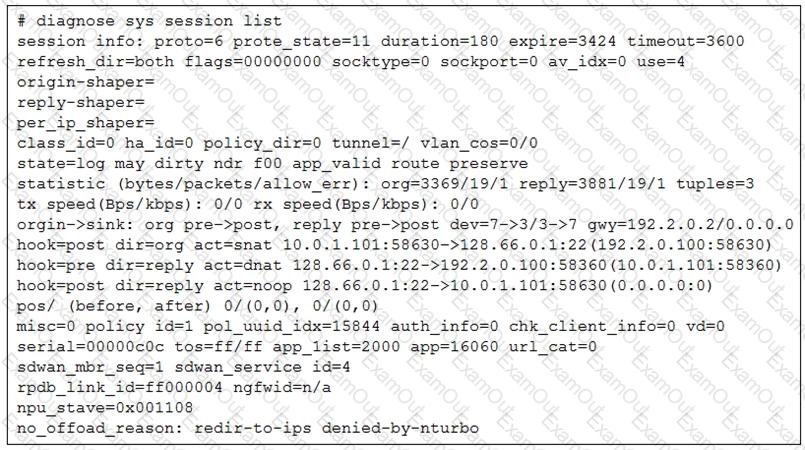
The administrator configured the SD-WAN rule ID 4 with two members (port1 and port2) and strategy lowest cost (SLA).
What are the two characteristics of the session shown in the exhibit? (Choose two.)
(In the context of SD-WAN, the terms underlay and overlay are commonly used to categorize links.
Which two statements about underlay and overlay links are correct? Choose two answers.)
(Refer to the exhibit. The administrator configured two SD-WAN rules to load balance the traffic.
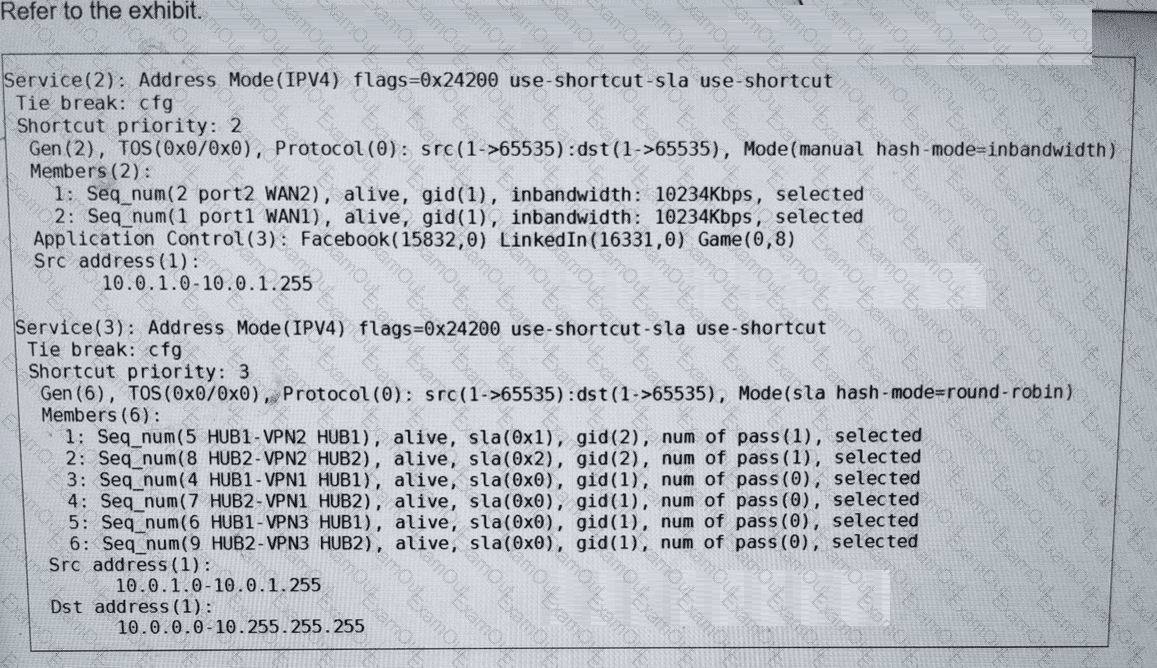
Which interfaces does FortiGate use to steer the traffic from 10.0.1.124 to 10.0.0.254 ? Choose one answer.)
You are planning a large SD-WAN deployment with approximately 1000 spokes and want to allow ADVPN between the spokes. Some remote sites use FortiSASE to connect to the company ' s SD-WAN hub. Which overlay routing configuration should you use?