Which two approaches facilitate efficient ADVPN deployment?
Refer to the exhibit, which shows a command output.
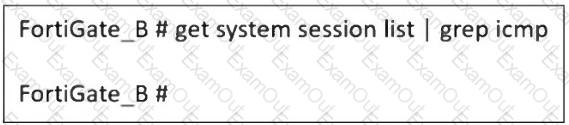
FortiGate_A and FortiGate_B are members of an FGSP cluster in an enterprise network.
While testing the cluster using the ping command, the administrator monitors packet loss and found that the session output on FortiGate_B is as shown in the exhibit.
What could be the cause of this output on FortiGate_B?
How can you ensure FortiGate can analyze encrypted HTTPS traffic?
A vulnerability scan report has revealed that a user has generated traffic to the website example.com (10.10.10.10) using a weak SSL/TLS version supported by the HTTPS web server.
What can the firewall administrator do to block all outdated SSL/TLS versions on any HTTPS web server to prevent possible attacks on user traffic?
In which two ways does FortiGate utilize the Internet Service Database (ISDB)?
Which two parameters must you configure in neighbor-range for ADVPN iBGP deployment?
Refer to the exhibits.
A policy package conflict status and information from the import device wizard in the Core1 VDOM are shown. When you import a policy package, the following message appears for the Web_restrictions web filter profile and the deep-inspection SSL-SSH profile: " The following objects were found having conflicts. Please confirm your settings, then continue. " The Web_restrictions and deep-inspection profiles are used by other FortiGate devices within FortiManager. Which step must you take to resolve the issue? (Choose one answer)
Refer to the exhibit, which shows an ADVPN network
An administrator must configure an ADVPN using IBGP and EBGP to connect overlay network 1 with 2.
What two options must the administrator configure in BGP? (Choose two.)
Refer to the exhibit.
The partial output of an OSPF command is shown. While checking the OSPF status of FortiGate, you receive the output shown in the exhibit. Based on the output, which two statements about FortiGate are correct? (Choose two answers)
An administrator configured the FortiGate devices in an enterprise network to join the Fortinet Security Fabric. The administrator has a list of IP addresses that must be blocked by the data center firewall. This list is updated daily.
How can the administrator automate a firewall policy with the daily updated list?