
What statement describes Cluster API?
An administrator is updating a VMware vSphere Kubernetes Service (VKS) cluster by editing the cluster manifest. When saving, there is no indication that the edit was successful.
Based on the scenario, what action should the administrator take to edit and apply changes to the manifest?
How would an administrator obtain the kubectl config file in the VMware vSphere Kubernetes Service (VKS)?
An administrator is deploying vSphere Kubernetes Service (VKS) on a VMware Cloud Foundation workload domain to support a new internal AI and data analytics platform. The environment must host both virtual machine (VM) applications and containerized workloads while maintaining a unified networking and security model through NSX. The design documentation outlines the requirements for the Supervisor infrastructure components.
What three components form the foundation of a VMware vSphere Kubernetes Service (VKS) Supervisor deployment? (Choose three.)
An administrator enabled cluster scaling by running kubectl edit deployment and updating the number of replicas from 5 to 10. When the cluster was redeployed with the number of replicas set to 5, what was the result?
A platform operator runs a kubectl command and receives the error " Couldn’t get current server API list " . Which command resolves the error?
What are three resource limitations defined on a vSphere Namespace? (Choose three.)
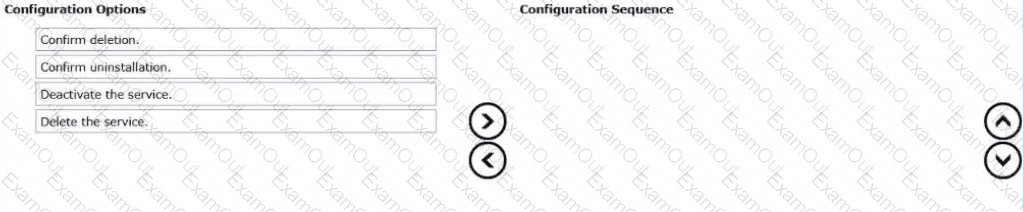
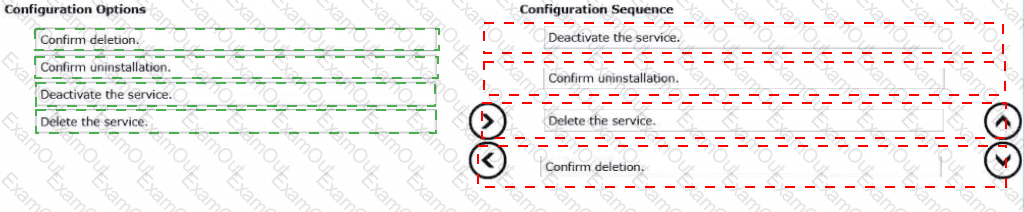
The administrator has completed a proof of concept for using Harbor as a container registry part of the Supervisor services and you are tasked for cleaning up the environment, starting with the unlnstall of the Harbor Supervisor service.
Drag and drop the four tasks into the correct order from Configuration Options on the left and place them into the Configuration Sequence on the right. (Choose four)
Which two capabilities are standard within a service mesh? (Choose two.)
What tool can be used to back up and restore workloads on clusters provisioned by vSphere Supervisor?
