
Refer to the exhibit.
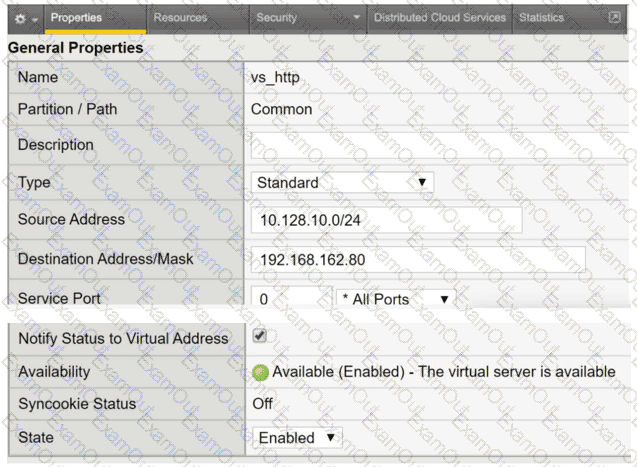
A user with IP address 192.168.162.70 is unable to connect to an HTTP application. What is a possible cause within the Virtual Server configuration?
A Virtual Server uses an iRule to send traffic to pool members depending on the URI. The BIG-IP Administrator needs to modify the pool member in the iRule. Which event declaration does the BIG-IP Administrator need to change to accomplish this?
Which two methods should the BIG-IP Administrator use to troubleshoot a pool member that has been markedDOWNby its health monitor? (Choose two answers)
A BIG-IP Administrator needs to view the CPU utilization of a particular Virtual Server. Which section of the Configuration Utility should the administrator use for this purpose?
Refer to the exhibit.
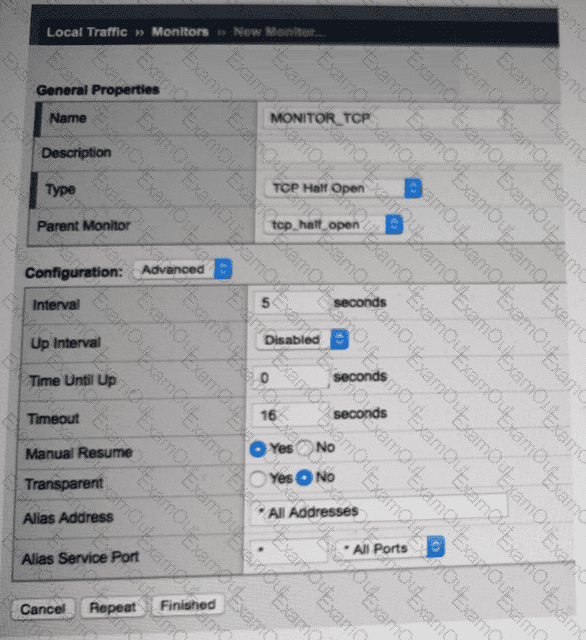
A pool member fails the monitor checks for about 30 minutes and then starts passing the monitor checks. New traffic is NOT being sent to the pool member. What is the likely reason for this problem? (Choose one answer)
A BIG-IP Administrator needs to collect HTTP status code and HTTP method for traffic flowing through a virtual server. Which default profile provides this information?
Users are unable to reach an application. The BIG-IP Administrator checks the Configuration Utility and observes that the Virtual Server has a red diamond in front of the status. What is causing this issue?
A BIG-IP Administrator configured a virtual server with a pool of 3 members and selected the Round Robin load balancing method to evenly distribute traffic across the pool members. During initial testing, the virtual server failed to respond to http requests.
Plaintext
ltm virtual http.vs {
destination 10.10.1.100:http
ip-protocol tcp
mask 255.255.255.255
pool http.pool
profiles {
tcp{}
}
serverssl-use-sni disabled
source 0.0.0.0/0
translate-address enabled
translate-port enabled
}
ltm pool http_pool {
members {
10.10.1.101:http {
address 10.10.1.101
session monitor-enabled
state checking
}
10.10.1.102:http {
address 10.10.1.102
session monitor-enabled
state checking
}
}
monitor tcp
}
What configuration change on the BIG-IP will resolve this issue?
Which two methods should the BIG-IP Administrator troubleshoot a Pool-member that's been marked "DOWN" by its Health Monitor? (Pick the 2 correct responses below)
