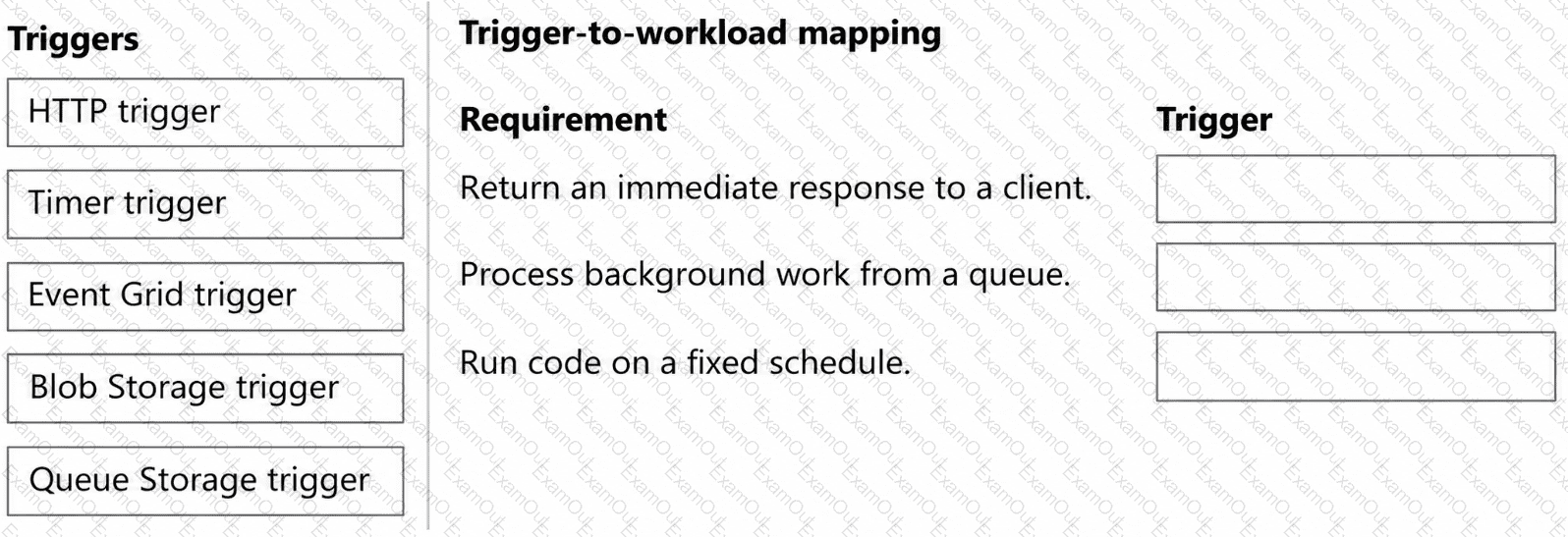
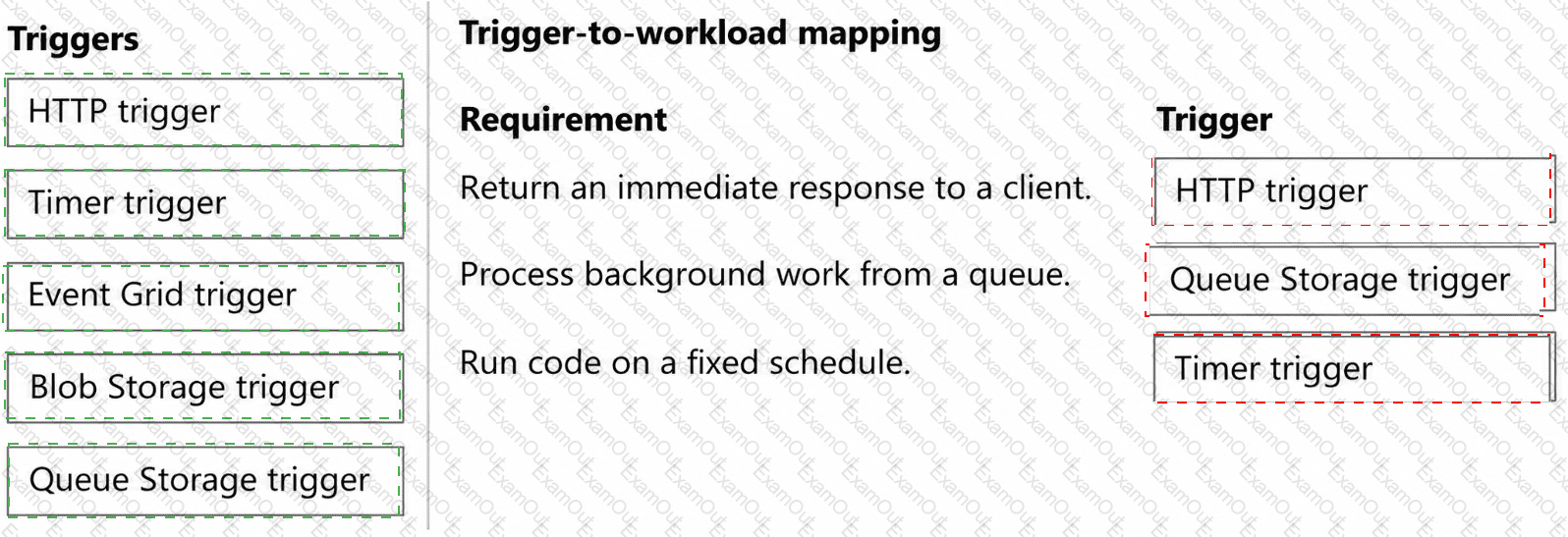
You are designing Azure Functions for three different backend workloads.
Each workload requires one of the following dispatching models:
- Return an immediate response to a client.
- Process background work from a queue.
- Run code on a fixed schedule.
You need to select the trigger for each requirement.
Which triggers should you select? To answer, move the appropriate triggers to the correct requirements. You may use each trigger once, more than once, or not at all. You may need to move the split bar between panes or scroll to view content.
NOTE: Each correct selection is worth one point.
You need to implement trace correlation according to the business requirements.
Which three actions should you perform in sequence? To answer, move the appropriate actions from the list of actions to the answer area and arrange them in the correct order.
NOTE: More than one order of answer choices is correct. You will receive credit for any of the correct orders you se lect.
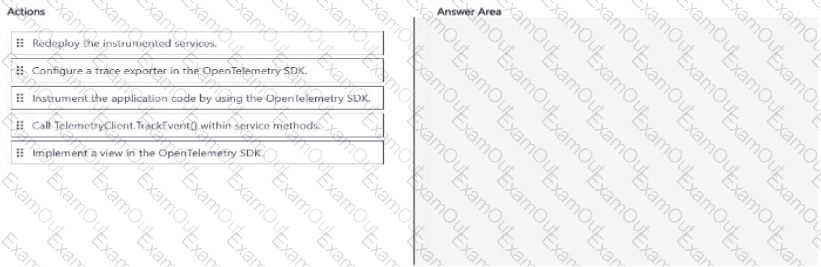
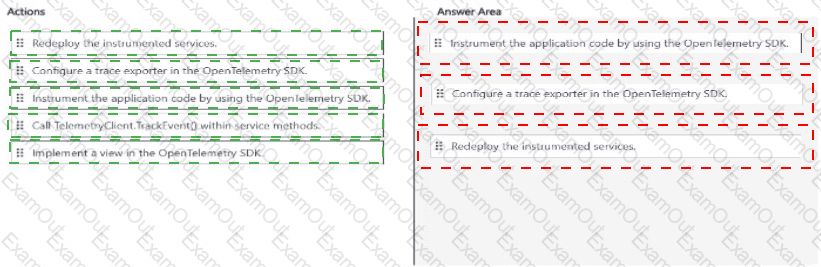
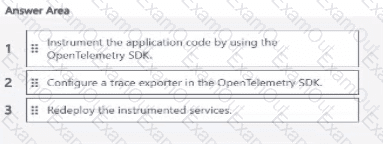
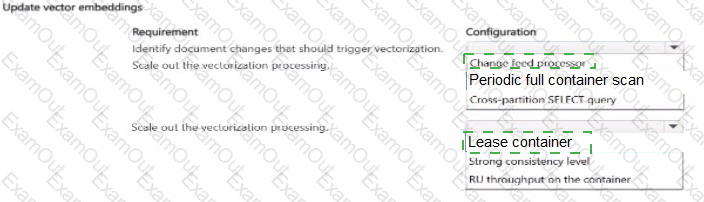
You need to configure vector embedding updates according to the business and technical requirements.
Which information should you use? To answer, select the appropriate option in the answer area.
NOTE: Each correct selection is worth one point.
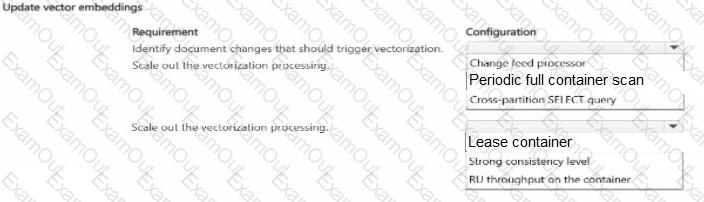

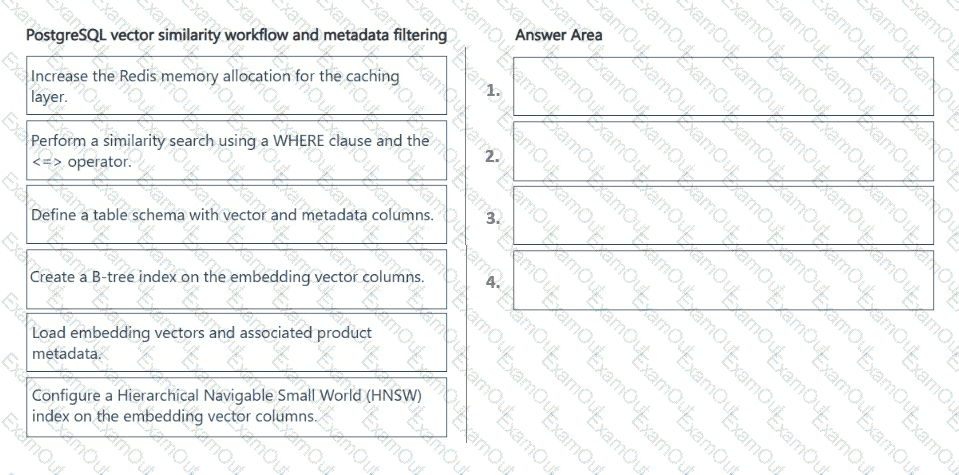
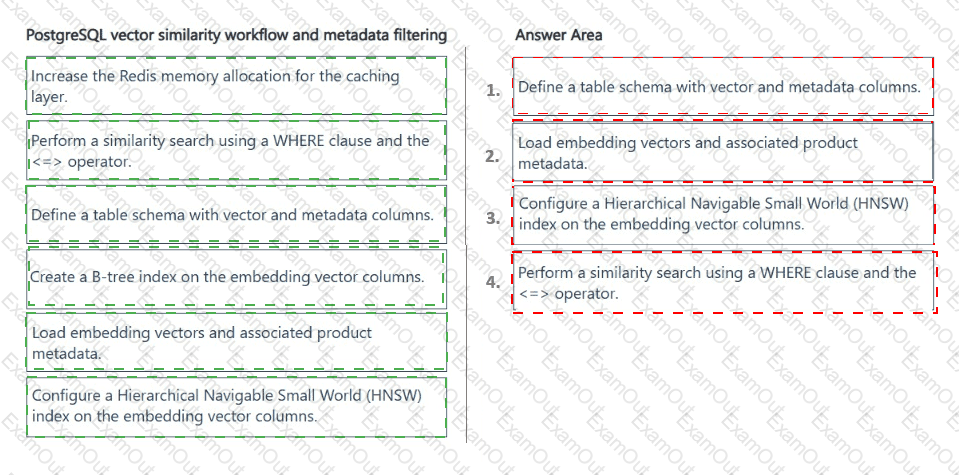
You need to implement the semantic retrieval workflow for the recommendation engine to meet the technical and performance requirements of Fabrikam Inc.
Which four actions should you perform in sequence? To answer, move the appropriate actions from the list of actions to the answer area and arrange them in the correct order.
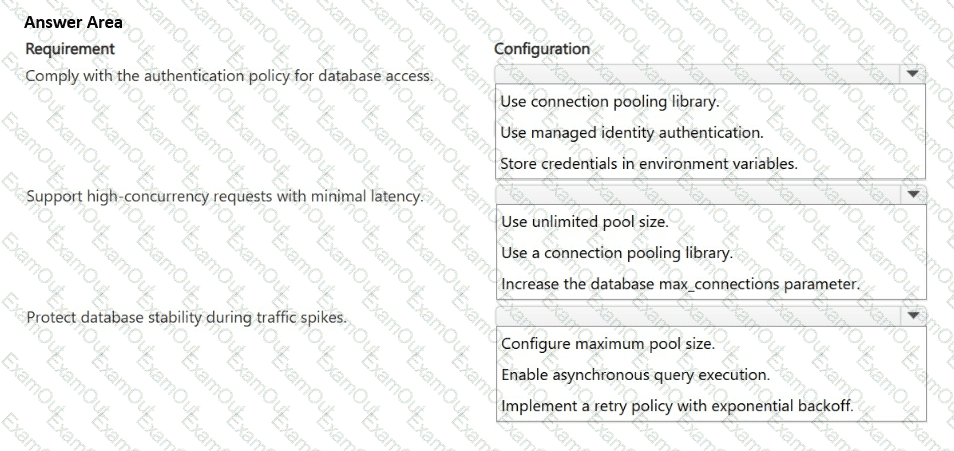
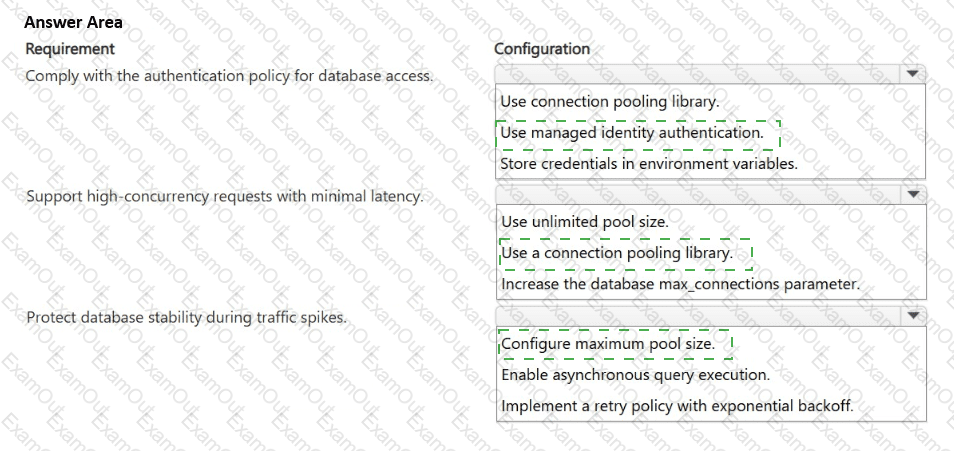
You need to optimize secure database connectivity from the containerized Recommendation API.
How should you configure the application?
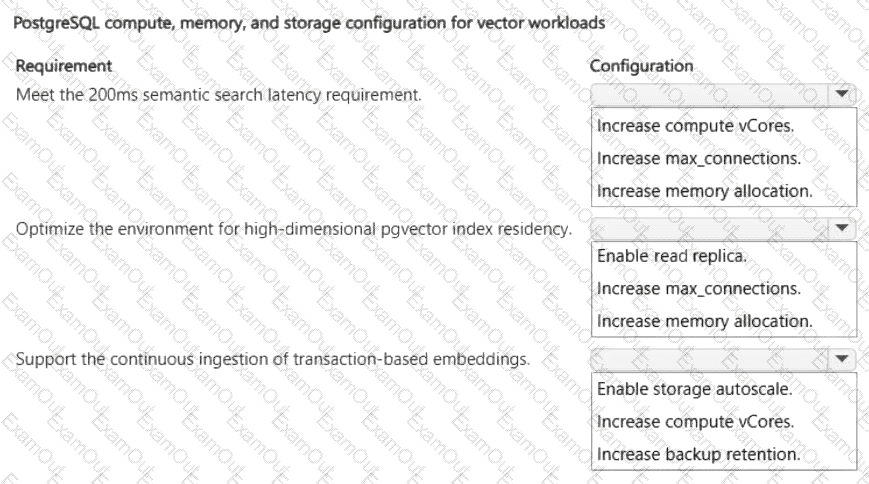
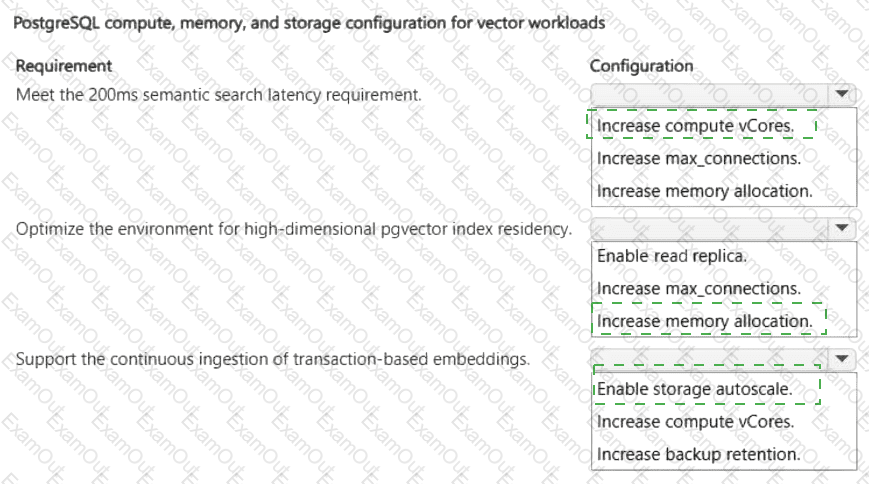
You need to configure the database resources for the Azure Database for PostgreSQL instance.
How should you complete the configuration to meet the business and technical requirements? To answer, select the appropriate options in the answer area.
NOTE: Each correct selection is worth one point.
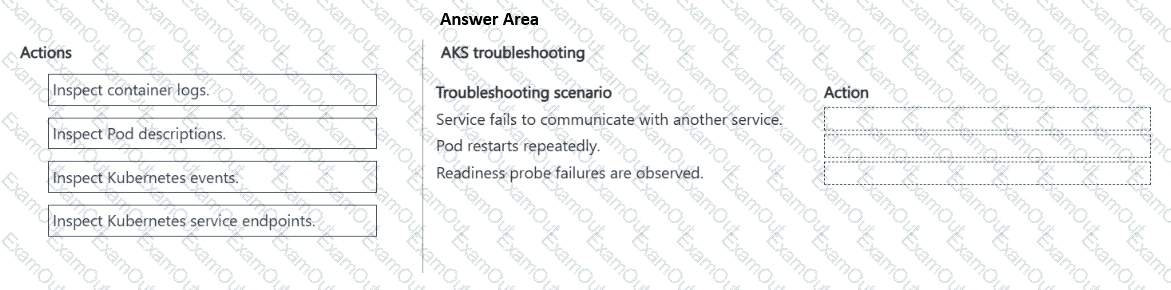
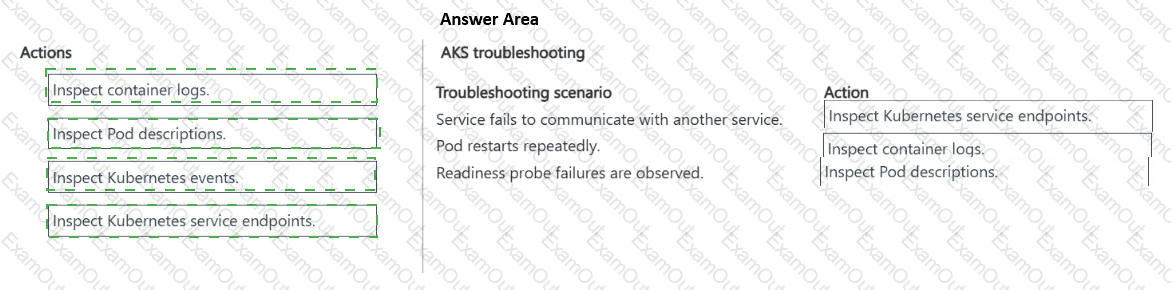
You need to troubleshoot connectivity failures between microservices running in AKS.
Which troubleshooting actions should you perform? To answer, move the appropriate action to the correct troubleshooting scenario. You may use each action once, more than once, or not at all. You may need to move the split bar between panes or scroll to view content.
NOTE: Each correct selection is worth one point.
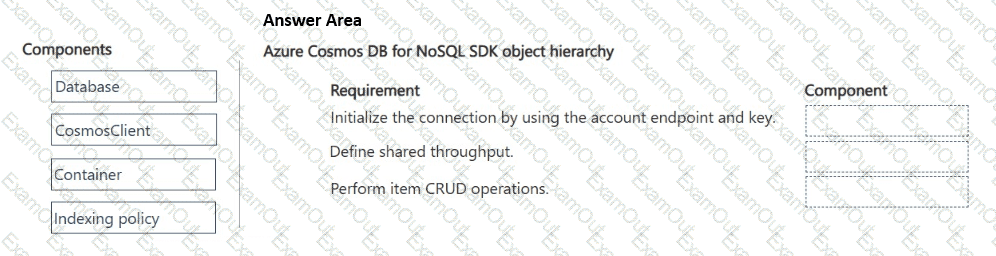
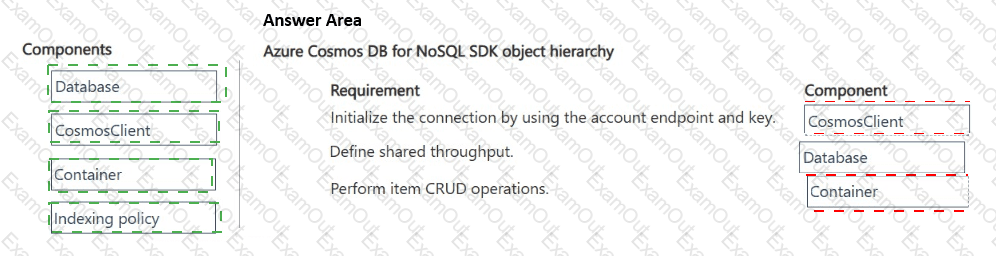
You are developing a .NET application that uses Azure Cosmos DB for NoSQL to store application data.
The application uses the Azure Cosmos DB for NoSQL SDK to interact with the database account.
The application must perform the following tasks:
Initialize the connection by using the account endpoint and key.
Define shared throughput.
Perform create, read, update, and delete (CRUD) operations on items stored in a container.
You need to implement the SDK components required for the application to access and manage data in Azure Cosmos DB for NoSQL.
Which SDK components should you use? To answer, move the appropriate components to the correct requirements. You may use each component once, more than once, or not at all. You may need to move the split bar between panes or scroll to view content.
NOTE: Each correct selection is worth one point.
You need to improve throughput for concurrent application requests to PostgreSQL.
What should you implement?
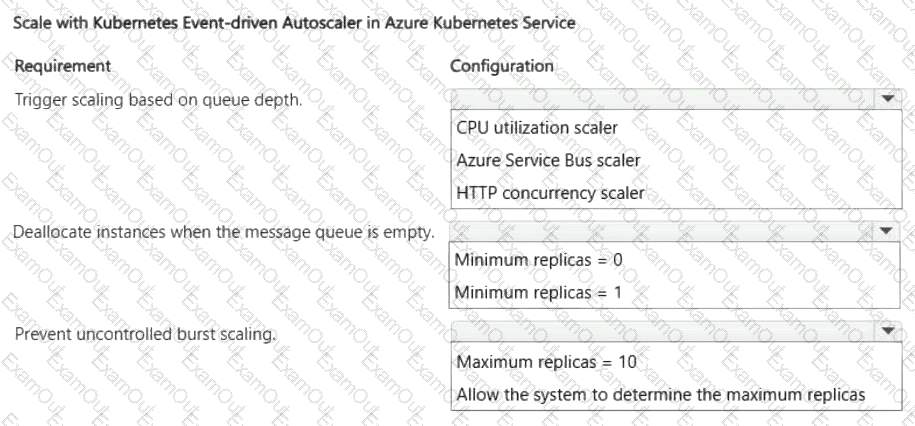
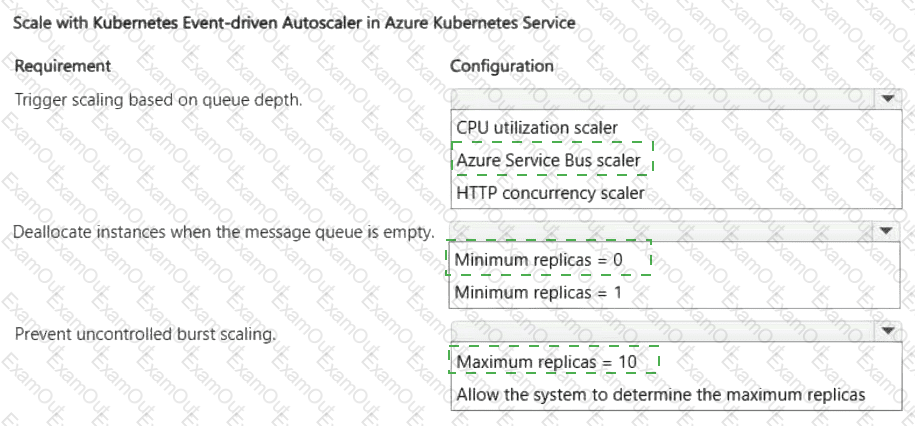
You need to deploy a batch retraining workload.
How should you complete the scaling configuration? To answer, select the appropriate options in the answer area.
NOTE: Each correct selection is worth one point.