
What is the term for the temperature at which air reaches 100% relative humidity?
Which term describes the rate of water vapor passing through a material?
Which of the following describes water originating from a sanitary water source and does not pose a substantial risk from exposure?
Which material loses most of its structural integrity when wet but regains its strength when dry?
SCENARIO: Use the diagram and information below to answer this question.
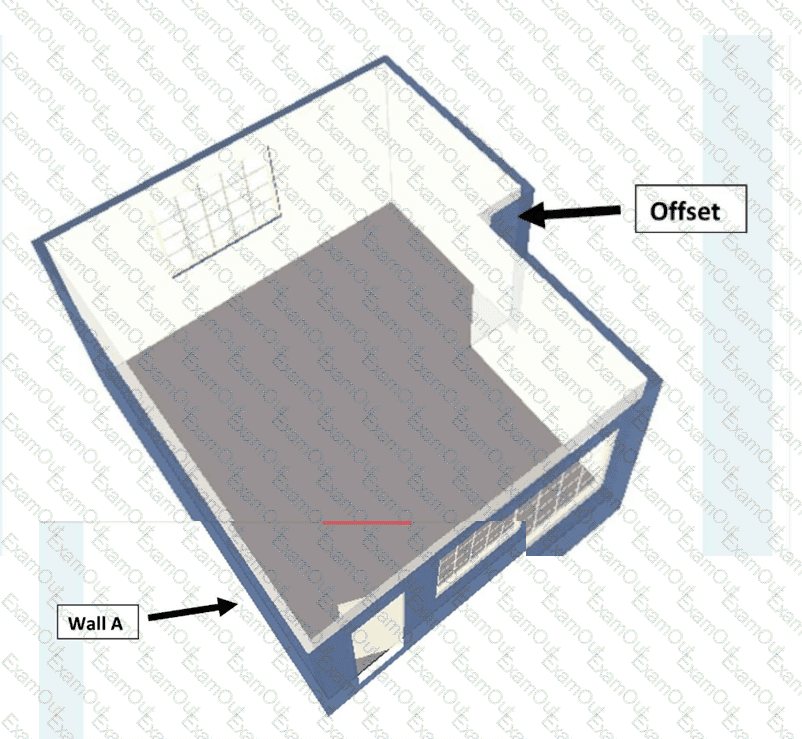
. The living room measures 20 feet x 16 feet, with an offset measuring 10 feet x 2 feet.
. The ceiling height is 8 feet.
. The entire floor area is wet, and moisture has been detected as high as 21 inches on all walls except Wall A.
. Water escaped from a broken pipe located behind Wall A. The entire area of wall A is wet.
. The ceiling is not affected.
Important information:
. The total square footage of the floor, including the offset, is 340 square feet
. The total square footage of Wall A after deducting the bottom 2 feet is 120 square feet
(USE THE SCENARIO) What is the total number of airmovers a restorer should install?
Before a technician wears a respirator, what is an employer required to provide?
What is the most likely result when the rate of evaporation is greater than the rate of dehumidification?
When applying antimicrobials (biocides), what is one of the requirements that may be listed on the EPA label?
What happens to the surface of a wet material as moisture evaporates?
What shall a restorer make the first priority during the initial inspection process?
