
Pre-Summer Sale Special - Limited Time 70% Discount Offer - Ends in 0d 00h 00m 00s - Coupon code: sntaclus

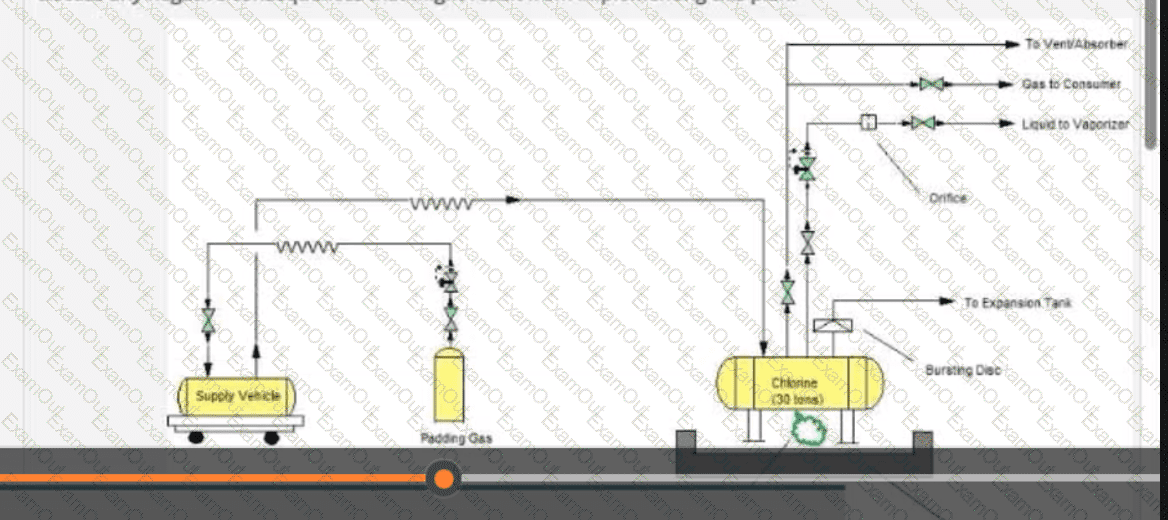
A chemical processor has a chlorine unloading facility shown in the sketch. The area has an ambient chlorine detector with audible alarm and a chemical operator is continually in attendance during the unloading operation. In the event of a leak, the action plan is to spray water on the leak and the contained spill to effect some dilution. Identify and discuss any negative consequences that might result from implementing this plan.

A.

Water spray always neutralizes chlorine safely with no risks

B.

Water spray may increase hazard by forming toxic/corrosive byproducts, spreading contamination, and increasing exposure risk

C.

The plan eliminates the need for detection systems

D.

There are no significant consequences if an operator is present

To maintain a dependable Operational Readiness practice (select all that apply):

A.

Ensure consistent implementation

B.

Involve competent personnel

C.

Focus the procedure on major process changes

D.

Determine scope of readiness reviews

A worker appears to be improvising instead of following procedures. A review indicates that the procedures provide the correct instructions. The worker says “I don’t understand the procedure, can you explain?” You explain the procedure, and then this worker performs consistently well. Then you give the worker a new procedure to follow and this worker begins to improvise on the new procedure. After a verbal explanation the performance improves. What is the most likely explanation for this situation?

A.

Worker does not understand what can go wrong if procedures are not followed

B.

Worker did not study new procedures before using them

C.

Worker may have a reading disability

An organization with strong Conduct of Operations is able to minimize: (select all that apply)

A.

Misunderstanding of expectations

B.

The frequency of operator refresher training

C.

The normalization of deviation

D.

The frequency of process safety incidents

E.

The frequency of process safety audits

Which of the following conditions could indicate performance problems in a plant’s Asset Integrity program? (select all that apply)

A.

An operator can identify each piece of equipment on the maintenance schedule and explain what is planned

B.

The metrics report related to Asset Integrity performance is 9 months out of date

C.

The rotating equipment is vibrating excessively

D.

Piping handling hazardous material within a containment area is not on the inspection list

When should worker refresher training be done? (select all that apply)

A.

When production schedules permit

B.

When training is required by law or regulation

C.

When there is a gap between a worker’s knowledge and the knowledge needed to do a job

D.

After the Process Safety program audit

E.

Before implementation of a process change

The training for maintenance personnel only needs to cover the testing and maintenance procedures of the specific equipment they service, true or false?

A.

True

B.

False

Who is involved in Management Review at an operating facility? (select all that apply)

A.

Plant Managers

B.

Member of community

C.

First Line Supervisors

D.

Engineers

E.

Process Safety Representative

Which of the following Risk-Based Process Safety elements are expected to be most directly and frequently involved with the Emergency Management Element? (select all that apply)

A.

Stakeholder Outreach

B.

Management of Change

C.

Training and Performance Assurance

D.

Hazard Identification and Risk Analysis

A facility has implemented a program of tracking the rate of submittals of process safety related employee suggestions. Which Risk Based Process Safety element does this program demonstrate?

A.

Workforce Involvement

B.

Operating Procedures

C.

Hazard Identification and Risk Analysis

D.

Management of Change